Order a standard home inspection for every Maine purchase, and add radon, septic or sewer scope, well water, or oil tank testing when the property shows those risk factors. An energy assessment covers different ground and usually makes more sense after closing. Before you commit, ask for a written scope and sample report, confirm the inspector’s insurance and turnaround time, and plan to be there in person.
TL;DR:
- Most home inspectors in Maine are not licensed, so rely on reputable directories and call to confirm experience with regional construction types.
- Expect to pay around $408 for a standard inspection, with additional costs for add-ons like radon, septic, or mold testing based on property risk factors.
- Always verify an inspector’s insurance, review sample reports, and ask about turnaround times and scope to avoid surprises during the buying process.
- Older Maine homes often require specialists’ inspections for wells, septic systems, oil tanks, and chimneys, which should be booked early based on property features.
- Coordinating inspections through an experienced real estate agent can save time, ensure proper communication, and help negotiate repairs effectively.
Table of Contents
- How to shortlist and compare local inspectors quickly
- What a standard home inspection includes and what it explicitly doesn’t
- How to choose the right inspector for this Maine property
- Costs and common add-ons in Maine: budgeting and pricing drivers
- Maine regulatory context and standards buyers should rely on
- Common Maine property issues that often require specialists
- Agent perspective: using inspections in negotiation and protecting the buyer
- The checklist most buyers skip
- How a local Realtor® can help coordinate inspections and protect your purchase
- Sources
- FAQ
How to shortlist and compare local inspectors quickly
Directories get you names, not answers. The InterNACHI directory for Maine lists certified inspectors by town, and the Maine Coalition of Home Inspection Professionals (MeCHIPs) publishes standards its members agree to follow. Neither one vets an individual inspector’s actual scope, contract terms, or fit for your specific house, so treat both as a starting point rather than a verdict.
Pull three or four names from those sources, then call or email each one with the same set of questions so you can compare answers side by side. Look past the price quote and check what’s actually included.
- Service area and coverage: confirm the inspector regularly works in your town or county, since Maine construction varies a lot between coastal, rural, and urban areas.
- Report format and turnaround: ask how the report is delivered and how many business days it takes.
- Add-ons offered: confirm whether radon, septic or sewer scope, and mold testing are available from the same inspector or require a referral.
- Insurance and certifications: ask for proof of liability insurance and which professional standards they follow.
- Price range: get a firm quote in writing tied to your home’s square footage and age.
| Comparison axis | What to ask for | Why it matters |
|---|---|---|
| Service area / coverage | Towns or counties regularly served | Local familiarity affects how well they spot region-specific issues |
| Report format & turnaround | Sample report and stated delivery window | Sets expectations for closing timelines |
| Add-ons offered | List of available tests (radon, septic, mold) | Determines if you need a second vendor |
| Insurance & certifications | Proof of liability coverage and standards followed | Protects you if something is missed |
| Typical base price range | Written quote tied to home size | Lets you compare quotes apples to apples |
Use a short script when you call: “Can you send a sample report before I book? What’s your turnaround time from inspection to final report? Do you offer radon, septic scope, or well testing, and at what added cost? What’s your reinspection policy if we need to verify a repair? Do you sell or refer repair work yourself? Can you email proof of your liability insurance?” Six direct questions, asked the same way to every inspector, turn a pile of website listings into a real comparison.
What a standard home inspection includes and what it explicitly doesn’t
A standard inspection under MeCHIPs Standards of Practice is a visual, non-invasive review of a home’s accessible systems, not a guarantee against hidden defects and not a code compliance check.
Typical coverage includes:
- Roof and exterior: covering material condition, flashing, and visible drainage issues.
- Structure and foundation: checking for visible cracking, settling, or moisture intrusion.
- Electrical and plumbing: confirming visible wiring, panels, fixtures, and pipes are functioning and safely installed.
- HVAC systems: testing heating and cooling equipment for basic operation.
- Attic and insulation: noting insulation levels and any visible ventilation problems.
- Interior and visible systems: doors, windows, stairs, and other accessible components.
The MeCHIPs standards draw a clear line: inspectors report what they observe, they don’t act as municipal code officials, and a report shouldn’t be read as prescribing repair methods, confirming permit status, or pricing out fixes. Radon, well water quality, septic systems, mold, and chimney flues generally fall outside this scope and need separate specialists.
Pro Tip: If your target property has a well, septic system, oil tank, or older chimney, ask about those add-ons when you first book, not after the report comes back with a recommendation to test further.
How to choose the right inspector for this Maine property
Membership in InterNACHI or MeCHIPs tells you an inspector has agreed to follow published standards. It doesn’t tell you how they handle a 1920s Maine farmhouse with balloon framing or a coastal property with a failing bulkhead. Judge the person, not just the credential.
- Ask for a sample report first. A photo-documented report with clear priority ratings (safety versus cosmetic) tells you more than any certification badge.
- Confirm experience with Maine-style construction. Older homes, fieldstone foundations, and knob-and-tube wiring show up often here and require an inspector who has actually seen them before.
- Get the turnaround time in writing. Most buyers need the report within a few business days to stay inside their contingency window.
- Ask directly whether they sell or refer repair work. An inspector who also quotes repairs has a conflict of interest worth avoiding.
- Check the reinspection policy. If you negotiate a repair, you’ll want the option to have the same inspector verify it was done correctly.
- Request proof of liability insurance by email, not just a verbal assurance.
Red flags worth walking away from: an inspector who won’t provide a sample report, one who pressures you to skip add-ons for a property with obvious risk factors like a private well, or one who can’t name their own insurance carrier when asked. The Maine Coalition of Home Inspection Professionals’ inspector finder and the InterNACHI directory are useful starting points, but the phone call is where you actually vet someone.
Costs and common add-ons in Maine: budgeting and pricing drivers
A 2026 pricing summary puts the Maine home inspection average around $408, with actual quotes varying by home size, age, and location. That figure is a helpful benchmark, but the final price on your quote should reflect your specific property, not a generic average.
Common add-ons and why they cost extra:
- Radon testing: typically run alongside the main inspection using a continuous monitor over 48 hours.
- Septic or sewer scope: relevant for rural Maine properties on private septic systems or older homes with aging sewer laterals.
- Mold testing: worth adding if the inspector notes visible moisture or a musty basement smell.
- Chimney inspection: important for older Maine homes with wood stoves or masonry chimneys that see heavy winter use.
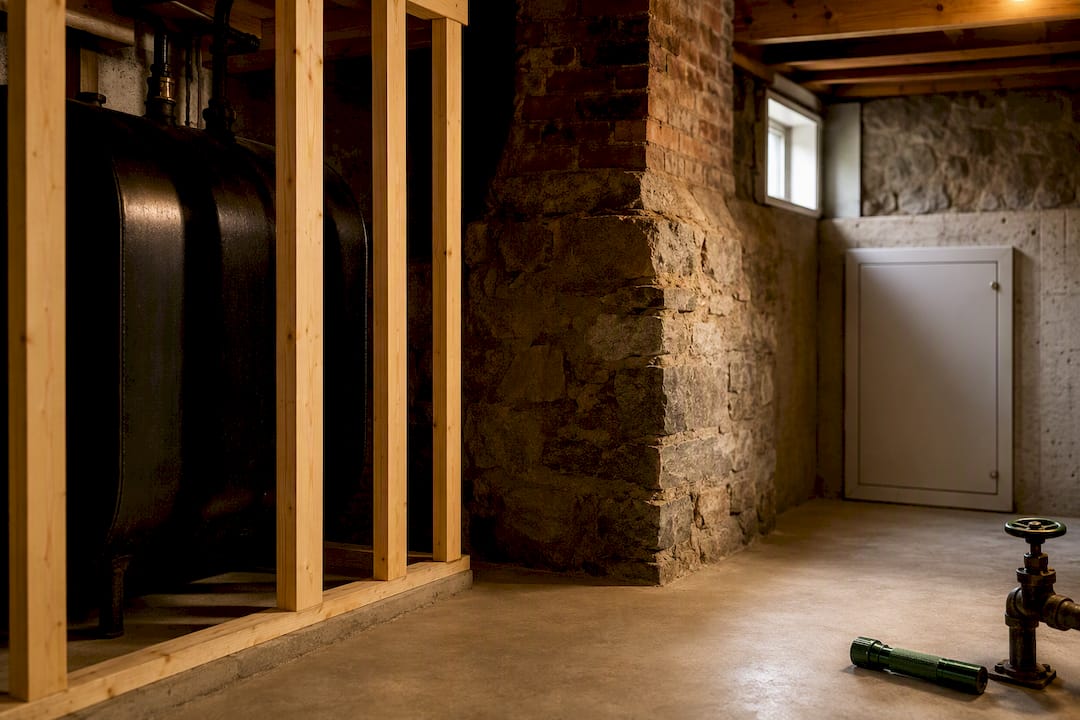
- Oil tank sweep: relevant for homes that may have an old buried tank, a common issue in older Maine neighborhoods.
A low advertised base fee can hide a narrower scope than a competitor’s higher quote. Always compare the written scope of work, not just the number at the bottom of the estimate.
Maine regulatory context and standards buyers should rely on
Maine does not currently license home inspectors at the state level. The Home Inspector Sunrise Report from the Maine Department of Professional and Financial Regulation walks through this gap, comparing Maine’s approach to states like New Hampshire that do license inspectors, and discusses what consumer protections are missing without a licensing framework.
In practice, that means the MeCHIPs Standards of Practice function as the closest thing Maine has to an industry benchmark, since membership is voluntary rather than legally required.
Your inspection contract should spell out:
- Exact scope: which systems are covered and which are excluded.
- Insurance: proof of liability coverage in case something is missed.
- Reinspection policy: how follow-up verification of repairs is handled and at what cost.
Without state licensing, the contract you sign carries more weight than it would in a state with mandatory standards.
Common Maine property issues that often require specialists
Maine’s older housing stock and rural geography create a specific set of risks that fall outside a standard inspection. Private wells need water quality testing since well water isn’t regulated the way municipal supplies are. Septic systems, common outside city sewer lines, need a dedicated inspection since failures are expensive and often invisible from the surface. Older oil tanks, especially buried ones, can leak and trigger cleanup costs. Masonry chimneys in older homes need a specialist look at the flue liner. Sewer line issues in older neighborhoods sometimes need a camera scope to catch root intrusion or collapse.
- Private well: order a water quality test if the home isn’t on municipal water.
- Septic system: order a septic inspection for any home not connected to city sewer.
- Oil tank: ask about tank sweep or scan if the home has ever used oil heat.
- Chimney: request a chimney inspection for any active wood stove or older masonry flue.
- Sewer line: consider a sewer scope for older homes near mature trees.
Pro Tip: Walk the property listing before you book and flag anything that hints at a well, septic system, or oil heat history: those three items alone drive most of the add-on decisions Maine buyers face.
Agent perspective: using inspections in negotiation and protecting the buyer
Booking the inspection within a day or two of an accepted offer keeps you inside a typical contingency window without rushing the inspector. Once the report lands, prioritize safety and structural findings for repair requests or price credits, and save cosmetic items for a shorter list you may not press at all. For anything with a wide repair cost estimate, get a third-party contractor quote before negotiating a credit. Document any repair agreement in writing, keep a copy of the full report, and confirm whether the seller expects proof of completed work or a reinspection before closing.
The checklist most buyers skip
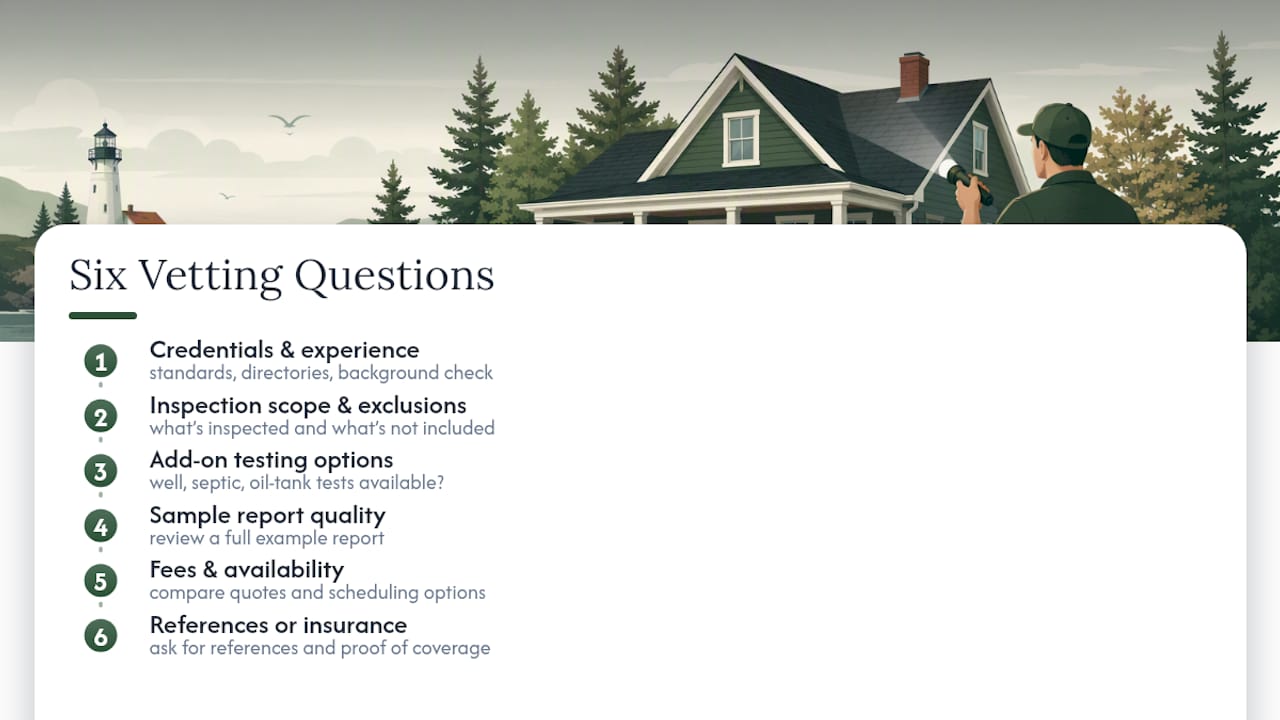
The standards exist. The directories exist. What’s missing for most Maine buyers is the discipline to actually call three inspectors and ask the same six questions before picking one. Most people pick whoever their agent mentions first or whoever has the cheapest quote on a listing page, and that’s backward. Price tells you almost nothing about scope.
The bigger blind spot is treating a home inspection as a single event instead of a decision point. A report that flags well water concerns or an aging septic system isn’t the end of the process, it’s the start of a second conversation about whether to test further, negotiate, or walk. Buyers who prioritize the property’s actual risk factors (a well, an oil tank, a swampy lot) before they even book tend to end up with fewer surprises than buyers who wait for the general inspector to tell them what’s missing.
— David
How a local Realtor® can help coordinate inspections and protect your purchase
Coordinating inspectors, reading a 40-page report, and negotiating repairs on your own is doable, but it takes time most buyers don’t have during a tight contingency window. An agent can help source inspectors familiar with your target area, review the report with you line by line, and handle the repair or credit conversation directly with the listing agent.

| What you handle alone | What an agent adds |
|---|---|
| Finding an inspector from a directory | Referrals to inspectors known for a specific town or home type |
| Reading the report yourself | A walkthrough of what’s negotiable versus cosmetic |
| Negotiating repairs directly | Direct negotiation with the seller’s agent on your behalf |
If you want that support for your next purchase, visit the Buying a Home page to get started.
Sources
The MeCHIPs Standards of Practice define what a standard Maine inspection covers and excludes. The Home Inspector Sunrise Report explains why Maine doesn’t license inspectors and what that means for consumer protection. The InterNACHI Maine directory is a practical starting point for finding local inspectors, and the CostWhale Maine pricing page gives a current benchmark for typical costs. If you’re weighing an energy assessment alongside your inspection, Horizon Homes’ comparison explains the difference clearly, and Gridwise Living’s weatherproofing guide is a useful companion for insulation and air-sealing questions that often come up after an inspection.
- Maine Coalition of Home Inspection Professionals — Standards of Practice
- Report of the Commissioner of Professional and Financial Regulation (Home Inspector Sunrise Report)
- How Much Does Home Inspection Cost in Maine? (2026) | CostWhale
- Certified Home Inspectors in Maine – InterNACHI
FAQ
What is the average cost of a home inspection in Maine?
Maine home inspection pricing in 2026 averages around $408, though actual quotes vary with home size, age, and location. Add-ons like radon or septic testing cost extra on top of that base price.
Is Maine getting rid of the inspection sticker?
This question usually refers to vehicle inspection stickers, which is a separate program from home inspections and outside the scope of this guide. For home purchases, Maine currently has no state licensing requirement for home inspectors, as outlined in the Sunrise Report.
How much does a Maine State inspection cost?
Maine doesn’t operate a state-run home inspection program or set a fixed inspection fee, since home inspectors aren’t licensed at the state level. Pricing is set independently by each inspector and averages around $408 in 2026.
How much does a home inspection typically cost in the US?
National home inspection costs vary widely by region, home size, and local market conditions, and this article does not have a sourced national figure to cite. For Maine specifically, the 2026 average sits around $408, which is a more reliable benchmark for local buyers than a national estimate.