For most Maine homes, a cold-climate heat pump paired with solid weatherization delivers the lowest long-term operating cost, though oil and propane remain practical where fuel access or upfront budget favor them. Wood and pellet systems work well for households set up to handle fuel storage and maintenance. State rebates through Efficiency Maine, plus assistance from MaineHousing and HEAP, can shift the math substantially, so the right system depends on your insulation, distribution setup, and what you can afford to install now.
TL;DR:
- Efficiency Maine offers $1,000 per outdoor unit, with lifetime rebates up to $9,000 for low income ducted installations and $6,000 for moderate income households.
- Whole home rebates require heat pumps to cover 80% of peak load under Manual J; many homes retain fossil fuel backup for cold or outages.
- Weatherization should precede equipment upgrades: sealing air leaks and adding insulation reduces heating demand and bills regardless of the system or fuel.
- State price tables show heat pump electricity often costs less per MMBtu than oil or propane, but changing fuel prices and power rates can reverse that.
- Cordwood and pellet prices typically fall below oil and propane per MMBtu, but wood systems require dry storage, ash removal, and annual chimney cleaning.
Table of Contents
- Common whole-home heating system types in Maine
- Why heat pumps keep gaining ground in Maine
- Heating oil and propane: costs, availability, and typical use in Maine
- Wood and pellet heating: a Maine-grown option
- Electric baseboard and geothermal systems
- Estimating your actual operating cost in Maine
- Maine incentives that change the math: Efficiency Maine, MaineHousing, and HEAP
- Choosing the right system: a decision checklist
- A Realtor’s view on heating systems and resale value
- How a Maine Realtor can help with heating-related decisions
- FAQ
- Sources
Common whole-home heating system types in Maine
Maine homes run on a mix of systems shaped by age, location, and fuel access. Ducted air-source heat pumps, including cold-climate models rated for subzero performance, work well in homes with existing ductwork or new construction. Ductless mini-splits suit homes without ducts, which describes much of Maine’s older housing stock, and can be added room by room without major renovation.
Oil furnaces and boilers remain common, especially in rural areas without natural gas infrastructure, often paired with radiators or forced-air distribution. Propane systems fill a similar role where oil delivery is less convenient, and some households blend propane with another primary source. Electric baseboard heating persists in older homes and seasonal camps where simplicity mattered more than operating cost at installation time. Wood and pellet stoves or boilers show up as both primary and supplemental heat, particularly in central and northern Maine where cordwood is cheap and plentiful. Geothermal systems remain a smaller slice of the market, usually tied to new construction or major renovations with the budget to support ground-loop installation.
- Ducted and ductless heat pumps fit homes with or without existing forced-air systems.
- Oil and propane systems suit rural properties without natural gas access.
- Wood, pellet, and electric baseboard systems serve as primary or backup heat depending on the household.
Why heat pumps keep gaining ground in Maine
Heat pumps move heat rather than generate it, pulling warmth from outside air even in cold temperatures and transferring it indoors. Cold-climate air-source heat pumps and ductless models are built specifically to maintain efficiency as temperatures drop, which matters in a state where winter lows routinely fall below zero.
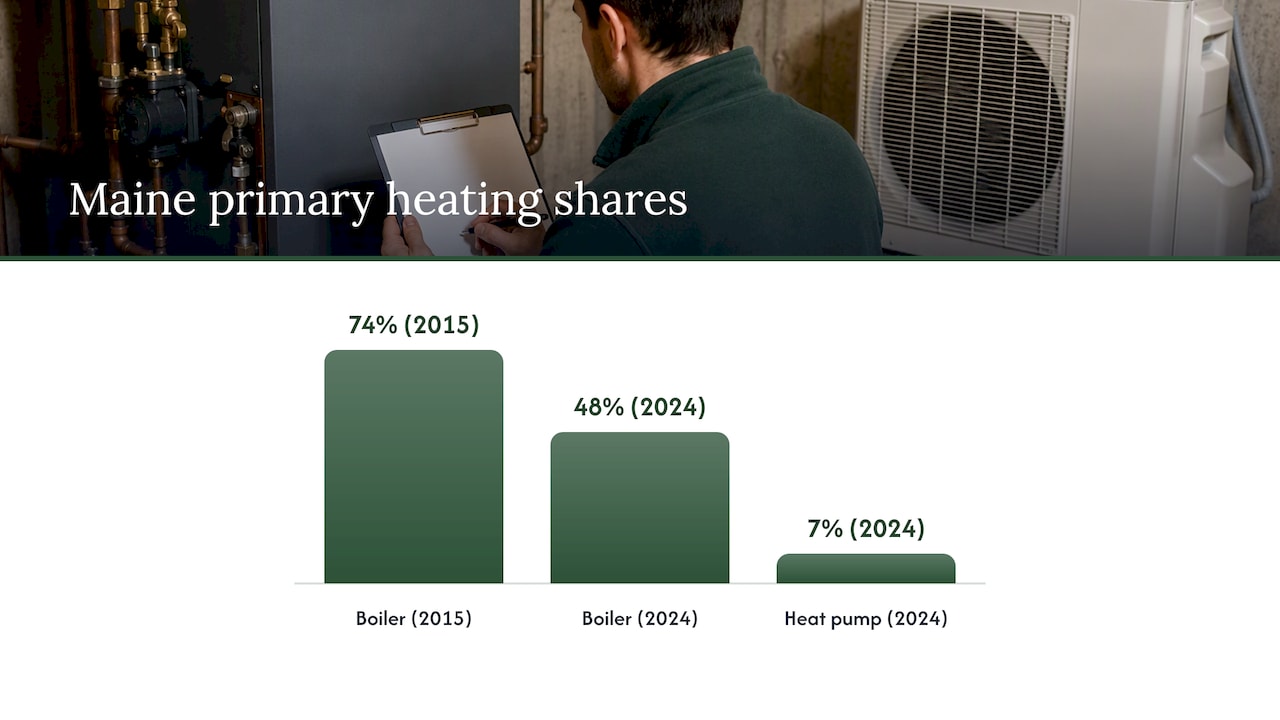
Adoption reflects that shift: boiler use in Maine dropped from 74% of primary residential heating systems in 2015 to 48% in 2024, while heat pumps climbed to 7% of primary systems statewide over the same period, according to Efficiency Maine’s residential baseline data. Local reporting backs up the savings case: Mainers who replaced oil or propane heat with heat pumps have seen energy-bill reductions of up to 60% in some documented cases, according to Bangor Daily News coverage.
Some Maine households that switched from oil or propane to heat pumps saved up to 60% on energy bills, according to Bangor Daily News, though results vary by home and prior fuel source.
For rebate eligibility, Efficiency Maine requires whole-home heat pump systems to be sized to cover at least 80% of a home’s peak heating load, calculated through a Manual J assessment rather than estimated from the old furnace’s output. Most cold-climate installations still keep the existing fossil-fuel system as backup for extreme cold snaps or outages. A properly installed heat pump typically lasts 12 to 15 years with routine filter cleaning and an annual professional check.
Pro Tip: Ask your installer for a written Manual J load calculation before signing a contract, not just a verbal estimate based on square footage.
Heating oil and propane: costs, availability, and typical use in Maine
Oil furnaces heat air directly for forced-air distribution, while oil boilers heat water for radiators or baseboard loops. Propane systems work similarly and often serve homes beyond the reach of natural gas lines, which covers much of rural Maine. Both fuels face price swings tracked weekly by the Maine Department of Energy Resources heating fuel price tables, which convert prices into dollars per MMBtu so homeowners can compare fuels on equal footing.
Oil and propane still make sense for homes where delivery infrastructure already exists, where upfront retrofit costs for a heat-pump conversion would be high, or where a reliable backup source matters during power outages. Storage tanks need periodic inspection, and both fuels carry higher carbon emissions per unit of heat than electricity generated from Maine’s grid mix.
- Oil furnaces and boilers suit homes with existing tanks and distribution systems.
- Propane fills gaps where natural gas is unavailable and oil delivery is impractical.
- Both fuels require annual service and carry price volatility tracked by state data.
Wood and pellet heating: a Maine-grown option
Wood stoves, pellet stoves, and wood boilers burn locally sourced fuel, a genuine advantage in a state with extensive timberland and competitive cordwood pricing. State fuel-price tables track cordwood and pellet costs per MMBtu alongside oil, propane, and electricity, letting homeowners see where wood fits into the broader cost picture.
These systems demand real upkeep: chimney cleaning, dry covered storage, and ash removal. Pellet systems need less daily attention than cordwood stoves but still require a hopper refill and occasional maintenance. Wood and pellet heat work best as a primary source for households willing to manage fuel logistics, or as supplemental heat that reduces reliance on a primary electric or oil system during the coldest stretches.
- Cordwood and pellet fuel prices typically track below oil and propane per MMBtu.
- Chimney inspection and cleaning should happen at least once a year.
- Dry, covered fuel storage prevents moisture issues that reduce burn efficiency.
Pro Tip: Have your chimney swept annually regardless of how little you burn. Creosote buildup is a fire risk even in low-use seasons.
Electric baseboard and geothermal systems
Electric resistance baseboard heating is simple and cheap to install, which is why it persists in older homes and seasonal camps, but it converts electricity to heat at a 1-to-1 ratio, making it one of the more expensive ways to heat a Maine home on a per-MMBtu basis. It remains common as a backup or supplemental zone heater even in homes with another primary system.
Geothermal systems move heat from stable underground temperatures and deliver strong efficiency year-round, but the ground-loop installation cost is substantial, so geothermal tends to make sense mainly during new construction or major renovations where the loop can be installed before landscaping or foundation work is finished.
Estimating your actual operating cost in Maine
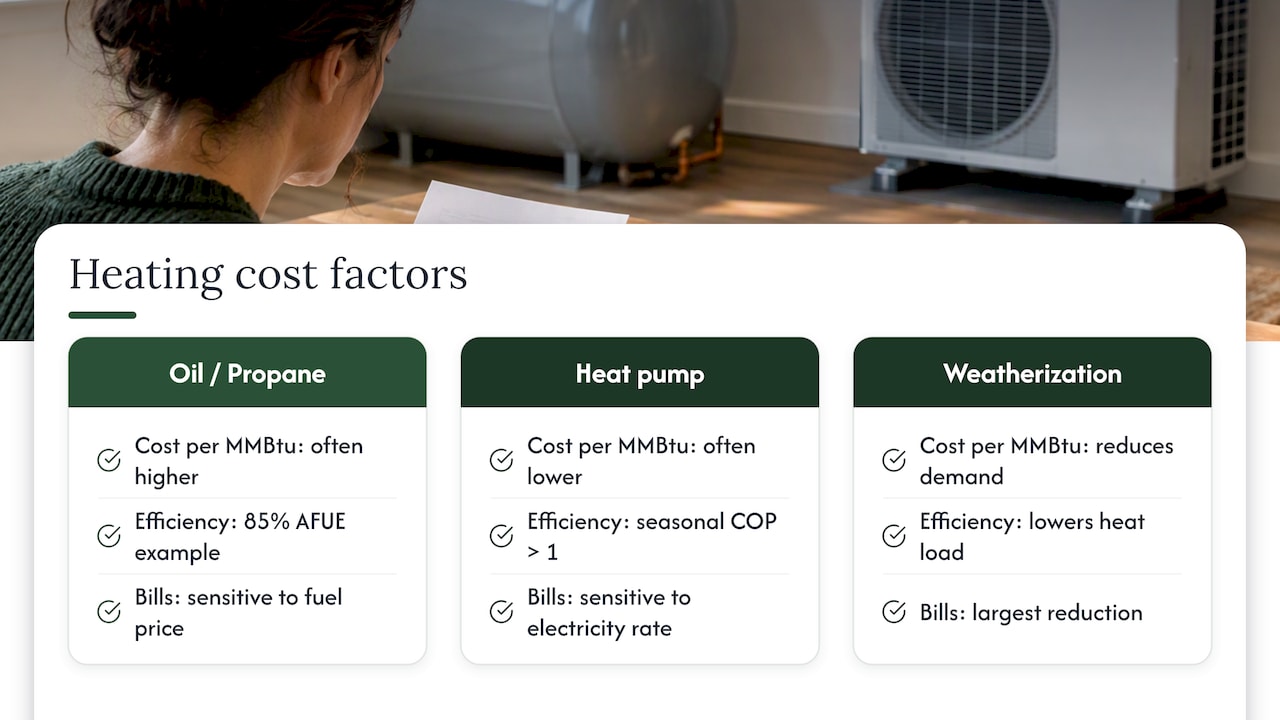
Comparing heating systems fairly means converting every fuel to a common unit, dollars per MMBtu, then adjusting for how efficiently your specific system converts that fuel into usable heat. A furnace rated at 85% AFUE wastes 15% of the fuel’s energy, while a heat pump with a strong seasonal COP can deliver more heat energy than the electricity it consumes.
Maine’s Department of Energy Resources weekly fuel price tables show electricity used in cold-climate heat pumps is often cheaper per MMBtu than heating oil or propane once efficiency is factored in, though the gap narrows or reverses depending on current fuel prices and local electricity rates.
Weatherization changes this equation more than any equipment swap. Sealing air leaks and adding insulation reduces the total heat load a home needs, which lowers fuel consumption and cost regardless of which system you choose.
Maine incentives that change the math: Efficiency Maine, MaineHousing, and HEAP
Efficiency Maine’s whole-home heat pump rebates range from $1,000 per outdoor unit for any income level up to $9,000 lifetime for low-income households installing ducted whole-home systems, with a $6,000 tier for moderate-income households. MaineHousing runs weatherization grants, the Central Heating Improvement Program (CHIP) for repair or replacement of failing heating equipment, and HEAP, which helps cover heating bills for low- and moderate-income households, as outlined in the state’s winter heating resources.
- Check your household income against Efficiency Maine’s eligibility tiers before applying.
- Gather recent income documentation and a copy of your current heating bill.
- Contact your local Community Action Agency to apply for HEAP or weatherization assistance.
- Ask about layering federal tax credits with state rebates on the same project.
Choosing the right system: a decision checklist
Start with weatherization since it reduces the load any system has to meet. Confirm what fuel access and distribution already exist in your home, since ductwork or an oil tank already in place changes your cheapest retrofit path. Get a written Manual J calculation for any heat-pump quote, reviewed by a technical source, and estimate payback against current fuel prices.
- Ask contractors for a Manual J load calculation, not a square-footage guess.
- Request itemized quotes covering equipment, labor, permits, and backup system needs.
- Confirm manufacturer warranty length and whether the installer is factory-certified.
- Ask for references from similar-sized Maine homes completed in the past two years.
- Watch for red flags: no written load calculation, vague pricing, or pressure to skip permits.
Pro Tip: Get at least two quotes for any whole-home heat-pump conversion. Sizing and pricing often vary more than homeowners expect.
A Realtor’s view on heating systems and resale value
Buyers across central and southern Maine weigh heating costs differently depending on the market, but reliable, efficient systems consistently support stronger offers. Documenting recent heat-pump installs or tank replacements, and disclosing system age and maintenance history, helps sellers justify asking price and shortens negotiations.
— David
How a Maine Realtor can help with heating-related decisions
Whether you are pricing a home with an aging oil furnace or evaluating how much a heat-pump upgrade might add to resale value, we help you weigh that decision against market timing and buyer expectations in your specific area.

- We consider how a home’s heating setup may compare to buyer expectations in your neighborhood.
- We provide advice on whether to upgrade before listing or price the home as is.
- We connect buyers and sellers with next steps through our buying and selling services.
If you are weighing a heating upgrade before selling or buying your next home in central or southern Maine, reach out to discuss your options.
FAQ
What is the best type of heating system for homes in Maine?
For most Maine homes, a cold-climate heat pump combined with good weatherization offers the lowest long-term operating cost. Homes with limited budget for retrofits or no access to efficient electrical upgrades often do better sticking with oil, propane, or wood depending on what’s already installed.
What is the most efficient type of home heating system?
Cold-climate air-source heat pumps are generally the most efficient option available to Maine homeowners because they move existing heat rather than generate it from fuel combustion. Efficiency Maine’s data shows heat pump adoption has grown steadily as cold-weather performance has improved.
What are the most common house types in Maine?
Maine’s housing stock includes a large share of older single-family homes, many originally built with oil furnaces or boilers and baseboard or radiator distribution. Newer construction and renovated homes increasingly incorporate ducted or ductless heat pumps as primary or supplemental heat.
How do people heat their homes in Maine?
Maine households commonly use oil, propane, wood, pellets, electric baseboard, or heat pumps, often in some combination for primary and backup heat. Boiler use has declined from 74% to 48% of primary systems between 2015 and 2024, while heat pump adoption has risen over the same period.
Sources
- Maine Residential Baseline 2024 — Efficiency Maine
- Heating fuel prices — Maine Department of Energy Resources (DOER)
- Heat pumps save Mainers up to 60 percent on energy bills, study finds — Bangor Daily News