
Yes, eligible veterans and active-duty service members can use a VA loan in Maine, and the biggest immediate wins are a $0 down payment requirement and access to MaineHousing’s SaluteME rate discount on top of the federal benefit. Start by pulling your Certificate of Eligibility, then compare at least two or three Maine lenders and check whether you qualify for MaineHousing’s added assistance.
TL;DR:
- Veterans can use VA loans in Maine with no down payment and access MaineHousing’s SaluteME rate discount, which lowers interest rates for qualified buyers.
- Maine’s rural housing stock may require extra appraisal consideration for septic, well water, and structural issues, possibly extending appraisal timelines slightly.
- The VA guaranty enables approval without private mortgage insurance, but buyers must still meet credit, income, and debt-to-income requirements set by lenders.
- Maine-specific programs like Salute Home Again and MaineHousing Advantage provide additional benefits, including closing cost assistance and interest rate discounts.
- Lenders’ VA experience and approval speed vary, so comparing preapprovals and asking about their VA loan process and fee exemptions is crucial for a smooth closing.
Table of Contents
- Maine Market Snapshot for VA Buyers
- Core VA Home Loan Benefits Every Maine Borrower Should Know
- Who Qualifies and How Do You Get a COE?
- What Is the VA Funding Fee and Who Skips It?
- Maine-Specific Programs: SaluteME, Salute Home Again, and MaineHousing Advantage
- How Do Maine Lenders Underwrite VA Loans?
- Costs, Appraisal Rules, and Property Tax Breaks in Maine
- Step-by-Step: Applying for a VA Loan in Maine
- Negotiating and Closing VA Deals in Maine’s Market
- Where to Get Official Help and Verify Program Rules
- Ready to Put Your VA Benefit to Work in Maine?
- Sources
- FAQ
Maine Market Snapshot for VA Buyers
Home prices across central and southern Maine have climbed enough that a zero-down loan option matters more than it did a decade ago. That’s exactly what a VA mortgage does: it lets a qualified buyer compete for a $400,000 house without draining savings for a down payment.
VA financing works in every Maine county, and with full entitlement there’s no hard cap on the loan amount as long as your income and credit support the payment. That’s different from the old system, where county-specific limits could box buyers out of pricier markets like Portland or Kennebunkport.
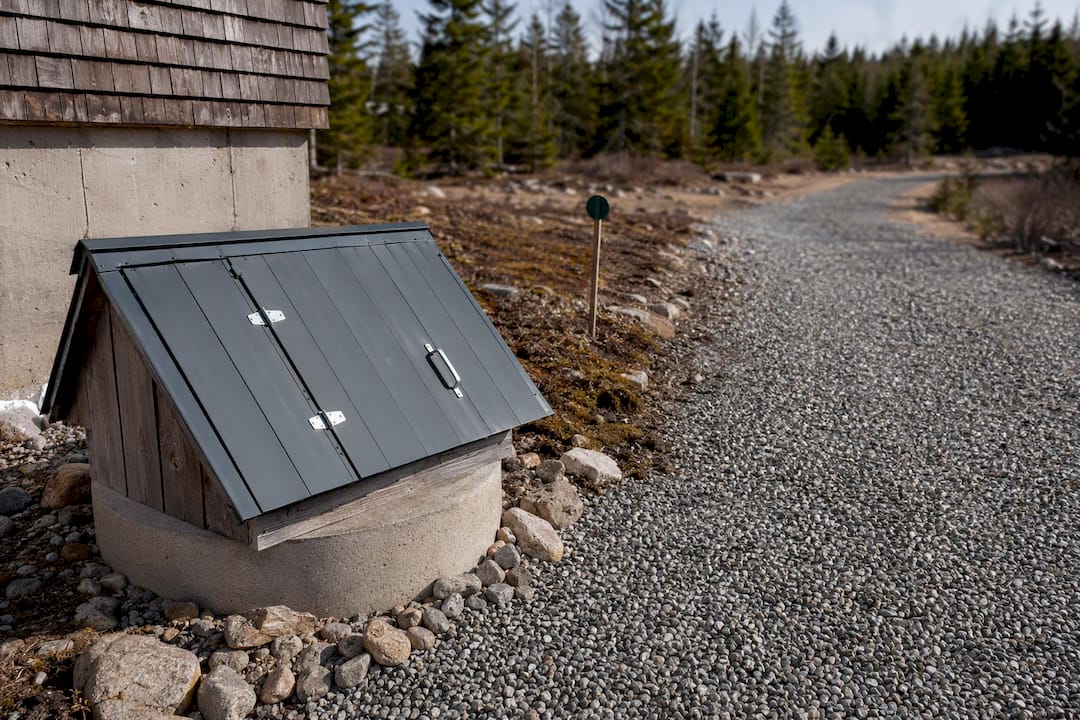
The catch shows up during appraisal. Maine has a lot of rural and semi-rural housing stock, and VA appraisers look closely at factors like septic system condition, well water quality, year-round road access, and structural soundness of older homes. These issues can sometimes extend the appraisal timeline by a small margin, so it’s wise to plan accordingly rather than be caught off guard.
Core VA Home Loan Benefits Every Maine Borrower Should Know
The VA guaranty is the reason lenders will approve a mortgage with no down payment and no private mortgage insurance. The government backs a portion of the loan, which shifts risk away from the lender and removes the PMI cost that trips up conventional buyers putting down less than 20%.
That guaranty translates into real savings over the life of the loan:
- No down payment required in most cases
- No monthly PMI premium, even at 100% financing
- Interest rates that typically run below conventional rates
- Limits on certain closing costs the lender can pass to you
None of that means underwriting disappears. Lenders still pull credit, verify income and employment, and review your debt-to-income ratio the same way they would for any other mortgage product. The VA sets the guaranty framework, not the lender’s approval criteria, so your file still needs to hold up on paper.
Who Qualifies and How Do You Get a COE?
Eligibility runs through a few distinct paths, and most active-duty and veteran homebuyers in Maine fall into one of them.
- Active-duty service members currently serving typically qualify after 90 continuous days of active service.
- Veterans with a qualifying discharge (other than dishonorable) generally qualify based on length and era of service.
- National Guard and Reserve members qualify under separate service-length rules, often six years of service or federal activation.
- Certain surviving spouses of service members who died in service or from a service-connected disability may also be eligible.
Getting your Certificate of Eligibility is faster than most people expect. You can request it instantly through the VA.gov eBenefits portal in many cases, ask your lender to pull it electronically (often within a day or two), or submit VA Form 26-1880 by mail, which can take several weeks. Have your DD-214 or current service statement ready, since it’s the backbone of that request.
One detail veterans often miss: entitlement isn’t a one-time-use benefit. You can reuse it for a future purchase once your current VA loan is paid off or sold, and in some cases you can restore entitlement even sooner through a one-time restoration option. If you’ve used a VA loan before in another state, that history follows you and your lender will factor it into how much entitlement remains available.
What Is the VA Funding Fee and Who Skips It?
Every VA loan carries a one-time funding fee unless the borrower is exempt, and the percentage depends on your down payment size and whether it’s your first time using the benefit.
Pro Tip: Check your exemption status before you shop for a rate, not after. If you’re entitled to disability compensation but haven’t formally applied for it yet, filing that claim first could save you thousands at closing.
| Situation | Funding Fee |
|---|---|
| First use, less than 5% down | 1.25% [source] |
| First use, 5% to 9.99% down | 1.25% [source] |
| First use, 10% or more down | 1.25% [source] |
| Subsequent use, less than 5% down | 3.3% [source] |
These figures come directly from the VA’s funding fee schedule, and they apply the same way whether you’re closing in Bangor or Biddeford.
Veterans receiving VA compensation for a service-connected disability are exempt from the fee entirely, and so are certain surviving spouses, Purple Heart recipients on active duty, and some borrowers with a pre-discharge disability rating. Lenders are required to verify your exemption status before closing under VA circular guidance, so flag it early rather than assuming it’s automatic. Most borrowers roll the fee into the loan balance rather than paying it in cash, and if you’re charged the fee in error, your lender can process a refund through VA Form 26-8937.
Maine-Specific Programs: SaluteME, Salute Home Again, and MaineHousing Advantage
The federal VA benefit is the foundation, but MaineHousing layers state programs on top of it that most out-of-state guides never mention.
- SaluteME offers a 0.50% interest rate discount on MaineHousing’s First Home Loan for qualified active-duty members, veterans, and retired military.
- Salute Home Again extends that same discount to veterans who’ve owned a home before, waiving the first-time-buyer requirement that usually applies to MaineHousing loans.
- MaineHousing Advantage adds $5,000 toward closing costs, but it requires completing an approved hoMEworks homebuyer education course and contributing at least 1% of the loan amount yourself, which can be gifted.
Combining these with a VA loan is common, but watch the fine print. MaineHousing products carry income and purchase-price limits that vary by county, and the Advantage assistance summary spells out the education requirement in detail. Skip that course and you lose the $5,000, no exceptions written into the program.
How Do Maine Lenders Underwrite VA Loans?
The VA guarantees the loan, but it doesn’t originate one. Every VA loan in Maine comes from a private bank, credit union, or mortgage company, and each sets its own credit overlays on top of what the VA requires. That’s why shopping around actually matters here, even though the government backing is identical no matter who you borrow from.
Some lenders close VA files in three weeks; others take six because they handle so few of them that the process stalls at every step. Rate and fees matter, but so does a lender’s actual VA experience.
Pro Tip: Ask a prospective lender how many VA loans they closed last year, not just whether they “offer” VA loans. A lender who processes VA files regularly will spot funding-fee exemptions and COE issues before they become closing-day surprises.
Get preapproved early, request a detailed Loan Estimate from at least two or three Maine lenders, and ask each one directly how they handle COE verification and funding-fee documentation. The differences show up fast once you compare paperwork side by side.
Costs, Appraisal Rules, and Property Tax Breaks in Maine
Seller concessions on a VA loan are capped at 4% of the home’s value as stated on the VA Notice of Value.
The appraisal itself determines value and confirms minimum property requirements. In Maine, that means extra scrutiny for:
- Manufactured and modular homes, which need specific foundation documentation
- Properties on private wells and septic systems
- Detached garages, barns, or outbuildings affecting overall value
Once you close, Maine’s veteran property tax exemption can meaningfully lower your annual bill. Qualifying veterans typically receive up to $6,000 off the property’s just value, and veterans with a service-connected disability requiring specially adapted housing can receive up to $50,000. You have to file with your municipal assessor by April 1 to get the exemption applied that tax year, and missing that date pushes the savings out by a full year.
Step-by-Step: Applying for a VA Loan in Maine
The process runs in a predictable sequence, and knowing the rough timeline for each step helps you plan a realistic closing date.
- Get your COE (instant to 5 business days depending on the request method).
- Get preapproved with a lender (1 to 7 days once your documents are in).
- Search for a home and work with a Realtor who understands VA timelines.
- Sign a purchase agreement with VA financing terms included.
- Schedule the VA appraisal (7 to 21 days, longer if septic or well testing is needed).
- Move through underwriting to closing (7 to 30 days depending on lender volume and file complexity).
Most delays trace back to two things: a COE that wasn’t pulled early enough, or an appraisal condition nobody anticipated. Both are preventable with a little preparation.
Have these documents ready before you start: DD-214 or service statement, Certificate of Eligibility, two months of pay stubs, two months of bank statements, two years of tax returns, a VA disability award letter if you’re claiming a funding-fee exemption, and the signed purchase agreement once you’re under contract. The VA’s home-buying process guide walks through each of these steps in more detail if you want the federal version side by side with what your lender asks for.
Negotiating and Closing VA Deals in Maine’s Market
Sellers in low-inventory Maine markets sometimes hesitate on VA offers because of outdated assumptions about appraisal strictness. The fix isn’t a higher price. It’s presenting a clean file: COE in hand, lender preapproval letter attached, and a clear, reasonable inspection timeline that doesn’t leave the seller guessing.
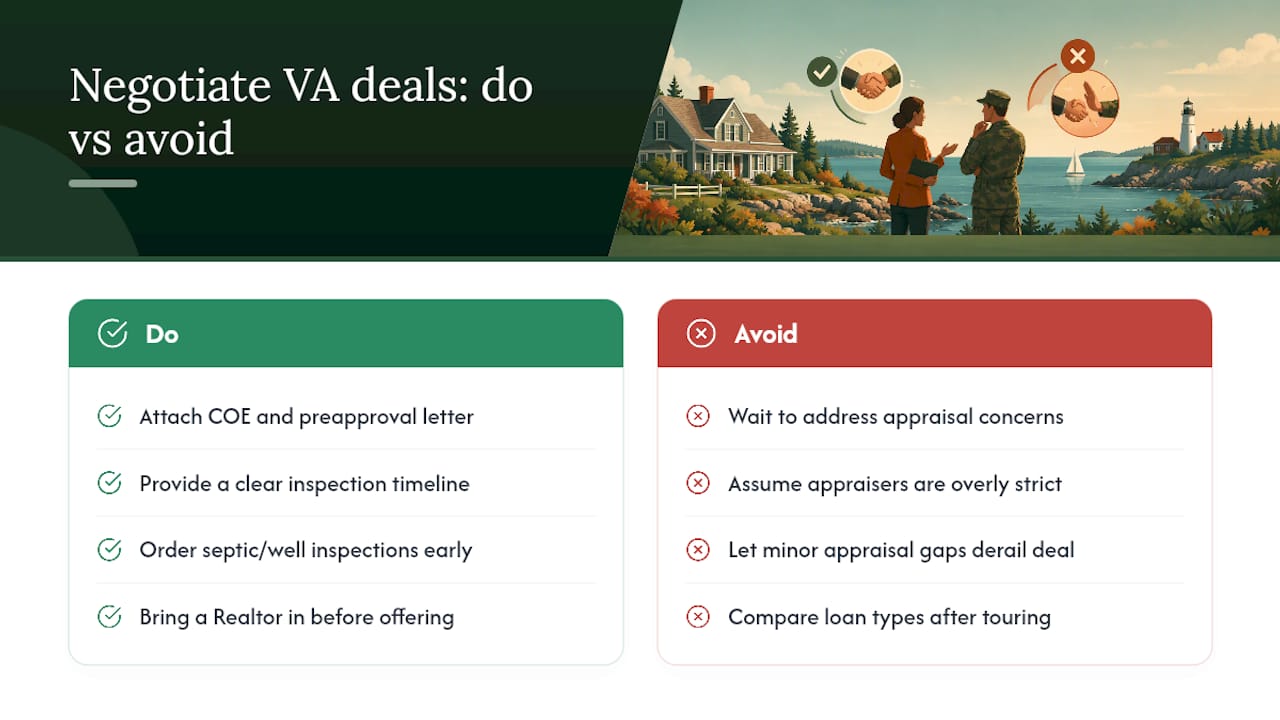
I’ve found that sellers respond better to VA buyers who address the appraisal question upfront rather than waiting for it to become a negotiating point later. If a rural property has a septic system or private well, get ahead of it. Offer to schedule those inspections quickly, and structure the purchase agreement so a minor appraisal gap doesn’t blow up the deal.
This is also where bringing in a Realtor early pays off, before you’ve written an offer, not after. Aligning your offer strategy with what a VA appraiser will actually flag saves everyone time. As a REALTOR® with 20 years working central and southern Maine, I’ve watched VA offers lose out to conventional buyers purely because the paperwork wasn’t ready. That’s a fixable problem, not an inherent disadvantage of the loan type. If you’re weighing VA against FHA or conventional financing for your situation, get that comparison sorted before you start touring homes, not after you’ve found the one you want.
— David
Where to Get Official Help and Verify Program Rules
Federal and state agencies keep their own guidance current, and it’s worth checking these directly rather than relying on secondhand summaries:
- The VA’s home loan program pages cover COE requests, funding-fee details, and the full buying process.
- MaineHousing’s SaluteME page explains program eligibility and how the rate discount is applied.
- Maine Revenue Services lists exemption amounts and the municipal filing process.
Ready to Put Your VA Benefit to Work in Maine?
Understanding the funding fee tables and MaineHousing eligibility rules is one thing. Actually finding a home in Bangor, Portland, or the towns between them that fits your budget and closes without drama is another. That’s where local representation earns its keep, especially when an appraisal condition or a seller’s unfamiliarity with VA financing threatens to stall your closing.
David Haydym has spent 20 years selling homes across central and southern Maine, and he works with buyers using VA financing, FHA, and conventional loans alike. Whether you’re buying your first home with a VA loan or searching for a vacation property near the coast, reach out through RealtorMaine to talk through your specific situation before you start touring listings. Before you sign anything, it’s worth walking through a buyer closing checklist so you know exactly what’s expected of you on closing day.
This article is general information, not a substitute for advice from a qualified financial advisor. Consult a qualified financial professional about your own circumstances before acting on anything here.
Sources
- SaluteME & Salute Home Again | MaineHousing
- Property tax exemptions | Maine Revenue Services
- Buying a home with a VA-backed loan | VA (home-buying process)
FAQ
Can I Use a VA Loan in a Different State Than Maine?
Yes. VA loan eligibility isn’t tied to any single state, so you can use your benefit to buy in Maine even if you last used it, or plan to use it next, somewhere else entirely. Your remaining entitlement carries with you regardless of where you’re stationed or where you choose to settle.
What Is the 4% Rule on a VA Loan?
The 4% rule refers to the cap on seller concessions, which cannot exceed 4% of the home’s reasonable value as stated on the VA Notice of Value, covering items like the funding fee and certain buyer costs separate from other seller-paid closing costs allowed under VA rules source.
How Much Income Do I Need for a $500,000 House With a VA Loan?
There’s no fixed VA income minimum, since qualification depends on your debt-to-income ratio, credit profile, and the specific lender’s guidelines rather than a set salary figure. A lender needs to run your full financial picture, including existing debts and the estimated tax and insurance escrow, to tell you what income actually supports that payment.
Is Maine a Good State for Veterans Buying a Home?
Maine offers real financial advantages for veteran homebuyers, including the SaluteME rate discount and a property tax exemption that can reach $6,000 or $50,000 for specially adapted housing. Combined with statewide VA loan access and no hard county loan limits under full entitlement, Maine gives veterans meaningful tools most other states don’t stack together in one place.