
In Maine, sellers alone decide how to handle competing offers, and no law gives priority to the first or highest bid on the table. Offer terms stay confidential unless the parties agree otherwise, though the mere existence of an offer can be shared. Buyers win by submitting clean, fully documented offers rather than guessing at competitors’ terms, and sellers protect themselves by choosing one lawful strategy and putting it in writing.
TL;DR:
- Sellers can accept, reject, counter, or request best and final offers; financing strength, contingency length, and closing flexibility can outweigh a higher price.
- A lender’s fully underwritten preapproval and financial documents dated within 30 days can strengthen credibility, alongside complete, correctly signed forms.
- Escalation clauses risk revealing confidential terms; Maine’s 2017 exception applies only after the seller rejects an offer in writing, so use them sparingly.
- A backup offer costs nothing and can become active if the primary contract terminates; financing, inspection, and title problems commonly derail Maine sales.
- Put offers and counteroffers in writing, and set an exact date and time for acceptance; vague deadlines such as a reasonable period leave timing unclear.
Table of Contents
- Maine rules: what the Real Estate Commission requires about offers and confidentiality
- Seller options and a decision checklist for handling multiple offers
- Buyer checklist: how to submit a clean, competitive offer in Maine
- Escalation clauses, disclosure limits, and the Maine advisory ruling you need to know
- Backup offers, contingencies, and normal timelines in Maine transactions
- Market context: 2026 Maine snapshot and how local supply affects multiple-offer likelihood
- How David Haydym approaches multiple offers for central and southern Maine clients
- Getting expert help with your Maine multiple-offer situation
- FAQ
- Sources
Maine rules: what the Real Estate Commission requires about offers and confidentiality
Maine’s offer process runs on a small set of rules that surprise a lot of first-time buyers and even some sellers. The Maine Real Estate Commission guidelines state plainly that the terms of an offer or counteroffer are confidential and cannot be shared without the parties’ written permission. The existence of an offer, on the other hand, is not confidential, so an agent can tell other interested buyers that an offer has come in without revealing price or terms.
There’s no legal concept of “first in line” or “highest bid wins” in Maine. The seller has sole authority over how offers get presented, negotiated, and accepted, which is why two sellers in identical situations can handle multiple offers in completely different ways and both stay within the rules.
A few procedural points matter just as much as the big-picture framework:
- Offers and counteroffers should be in writing, and written counteroffers should state a clear time frame for acceptance.
- Agents must furnish copies of signed offers and counteroffers to the person who signed them, as outlined in Chapter 410.
- Confidentiality around offer terms has one notable exception tied to escalation clauses, covered in a 2017 advisory ruling.
Understanding where confidentiality ends and disclosure begins keeps everyone out of trouble and sets realistic expectations for how much information you’ll actually get during a bidding situation.
Seller options and a decision checklist for handling multiple offers
When more than one offer lands, a seller generally has four lawful paths: accept one offer outright, reject all of them, counter one or more, or invite everyone to submit a best and final offer. Each comes with trade-offs worth weighing before responding to anyone.
- Accept the strongest offer immediately if price, financing, and timeline all line up and there’s no benefit to waiting.
- Counter the most promising offer when terms are close but one or two details, like closing date or contingency length, need adjustment.
- Invite best and final offers when several bids are competitive and more clarity would help you choose, though this can discourage buyers who feel they’ve already made their best move, according to NAR’s consumer guidance.
- Reject all offers if none meet your minimum requirements and you’d rather wait for better terms.
Price matters, but financing strength, contingency scope, and closing flexibility often decide which offer actually closes. A cash buyer with a flexible move-in date can beat a higher offer burdened by a long financing contingency.
Pro Tip: Set a written deadline for all offers and put your decision process in an email or letter so there’s a clear record if questions come up later.
Buyer checklist: how to submit a clean, competitive offer in Maine
Because offer terms are confidential, you can’t see what you’re up against. The smartest move is building an offer so complete that it’s hard to beat on paper, regardless of what else comes in.
Start with documentation. A strong preapproval letter, current proof of funds, and fully completed, correctly signed forms tell a seller you’re ready to perform. Missing signatures or outdated financial paperwork are two of the fastest ways an otherwise competitive offer gets set aside.
Contingencies deserve careful wording rather than automatic removal. A shorter inspection period, paired with a pre-inspection where allowed, can signal seriousness without leaving you exposed. Review inspection standards before shortening timelines, since Maine also layers in lead paint disclosure rules for homes built before 1978 that affect how much time you reasonably need.
Since escalation clauses carry disclosure risk under Maine’s rules, many buyers get similar leverage through other means instead:
- Larger earnest money deposits that show financial commitment.
- A flexible or seller-preferred closing date.
- A clean financing contingency with a clearly stated, realistic timeline.
- Proof of funds dated within the past 30 days.
Pro Tip: Ask your lender for a fully underwritten preapproval rather than a basic prequalification letter. It carries more weight with sellers evaluating financing risk.
Escalation clauses, disclosure limits, and the Maine advisory ruling you need to know
An escalation clause lets a buyer automatically increase their offer by a set amount above the next-highest bid, up to a ceiling. The catch in Maine is confidentiality: proving the escalation triggered usually means revealing a competing offer’s terms, which the base rule prohibits without written consent.
A 2017 advisory ruling from the Maine Real Estate Commission created a narrow exception: when a seller rejects a competing offer in writing, that written rejection can relieve the listing agent from the usual prohibition on disclosing it to the escalating buyer, even without the rejected buyer’s consent.
This exception is fact-specific, not a blanket rule. A few practical safeguards:
- Get the seller’s written rejection before assuming disclosure is permitted.
- Document any authorization in writing, separate from the purchase agreement itself.
- Treat escalation clauses as a last resort rather than a default strategy.
Backup offers, contingencies, and normal timelines in Maine transactions
A backup offer is a signed agreement that activates only if the primary contract falls through, and it costs a buyer nothing to put in place while waiting.
- Submit a backup offer when you’re genuinely interested in a property but lost the first round, since inspection or financing contingencies frequently cause primary deals to collapse.
- Expect financing and inspection contingencies, followed by title issues, to be the most common reasons a Maine sale fails to close.
- Know that sellers typically keep backup offers in place until the primary contract either closes or officially terminates, at which point the backup can convert into the active contract.
Written acceptance and counteroffer deadlines should state a specific date and time, not vague language like “within a reasonable period.”
Market context: 2026 Maine snapshot and how local supply affects multiple-offer likelihood
Statewide, 1,542 existing single-family homes sold in August, down 10.09% year over year, while the median sales price rose to $424,550, up 4.31%, according to the Maine Association of REALTORS® housing report. Fewer closed sales alongside rising prices points to tighter supply in some segments even as overall transaction volume cools.
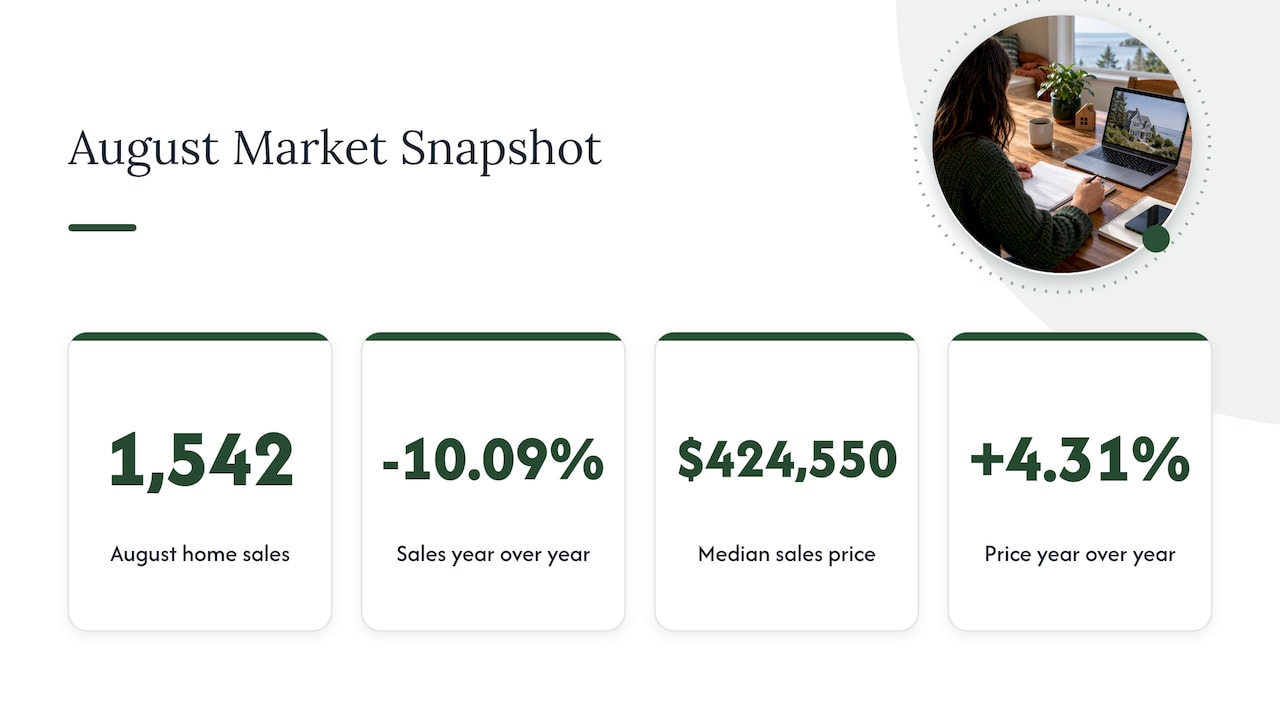
That statewide picture hides meaningful county-level variation. Some counties continue to see brisk, competitive activity while others have loosened considerably as inventory has grown, giving buyers more room to negotiate. Portland-area pricing illustrates this spread, with local market data showing a wide range depending on neighborhood and property type. The practical takeaway: whether you’re likely to face a multiple-offer situation depends far more on your specific town and price range than on any single statewide trend.
How David Haydym approaches multiple offers for central and southern Maine clients
Twenty years in Maine real estate has taught me that responsiveness and clean documentation win more often than aggressive price alone. I rely on data-driven pricing to set realistic expectations before an offer ever gets written, then stay reachable outside standard hours so clients don’t lose momentum during a fast-moving negotiation.
One recent situation stands out: a seller chose a slightly lower offer over a higher one because the buyer’s financing was stronger and the closing date matched a tight moving timeline. Terms beat price that day, and it’s a pattern I see often.
— David
Getting expert help with your Maine multiple-offer situation
Navigating a bidding situation without local guidance leaves money and leverage on the table. Our Buying a Home and Selling My Home services bring pricing analysis, prompt communication, and hands-on negotiation to every step, including contract review for condos, townhouses, and single-family homes across central and southern Maine.

An initial consult starts with a conversation about your goals and timeline, followed by a pricing strategy session and a clear plan for the offer process ahead. We have experience guiding many home sales to close and provide assistance to buyers of investment and vacation or seasonal properties in competitive markets.
When working with us, you can expect:
- Pricing analysis based on current local data.
- Prompt communication, including availability beyond standard business hours.
- Support throughout every negotiation and contingency.
- Document review suited to condos, townhouses, and single-family properties.
Reach out through RealtorMaine to schedule a consult and get a clear plan for your next move.
FAQ
What is the rule about multiple offers on property?
In Maine, there’s no legal priority given to the first or highest offer. Sellers decide how to handle competing offers, and the terms of each offer stay confidential unless the parties agree in writing to share them, per Maine Real Estate Commission guidelines.
How much is 1 acre of land worth in Maine?
Land values vary widely across Maine depending on location, access, and zoning, and no single statewide figure applies. A local comparative market analysis is the most reliable way to estimate value for a specific parcel.
Are house prices dropping in Maine?
No, statewide median home prices rose to $424,550 in August 2026, up 4.31% year over year, even as the number of closed sales declined, according to the Maine Association of REALTORS®. County-level trends vary, with some areas seeing more buyer leverage than others.
What are Maine listings?
Maine listings are properties actively marketed for sale through the state’s multiple listing service, where licensed agents present offers to sellers under Maine Real Estate Commission rules. Tools like SendMLS help agents and investors manage offer submission and tracking across these listings.
What should sellers disclose when multiple offers come in?
Sellers and their agents can disclose that multiple offers exist, but not the specific terms of any individual offer without written consent. Maine’s seller disclosure rules separately require disclosure of known property defects, regardless of how many offers are on the table.
Sources
- OFFERS/COUNTER OFFERS – GUIDELINES — Maine Real Estate Commission
- Maine home sales down in August; values increased — Maine Association of REALTORS® / MaineHousingReport (Aug 2026)