
An inspection contingency in a Maine purchase contract gives you a set window to inspect the property and then accept it as is, negotiate repairs or credits, or walk away and recover your earnest money. Seller disclosures do not substitute for this right. The contingency works alongside Title 33 §173 and the deadlines built into the Maine Association of Realtors Purchase & Sale Agreement.
TL;DR:
- Most Maine purchase agreements allow 7 to 14 days from the effective date; schedule inspections immediately and deliver your decision in writing before the deadline.
- Sellers do not have to make repairs; use a written addendum for agreed fixes or credits, and obtain receipts for work completed before closing.
- Maine disclosures cover known conditions but are not warranties, and sellers may mark items as unknown, so independently inspect wells, septic systems, and heating.
- Homes built before 1978 have 10 days for lead testing alongside the general contingency, and seasonal properties may need extra time to reactivate systems.
- In multiple offer situations, limiting requests to major structural, safety, or environmental defects can protect key interests without raising concerns about a broad contingency.
Table of Contents
- What an inspection contingency is in a Maine purchase agreement
- Inspection contingency window: the deadlines that actually matter in Maine
- Three concrete buyer responses after the inspection report arrives
- Seller disclosures vs. inspections: Maine law and contract implications
- Practical scheduling and inspection tips for Maine buyers
- Examples of common repair requests and how sellers typically respond in Maine
- The impact of inspection contingencies on offer strength and seller perception in Maine
- Guidance on choosing qualified home inspectors familiar with Maine properties
- What happens if deadlines in the inspection contingency are missed or extended
- How inspection contingency processes differ for unique Maine property types
- How an experienced Maine buyer’s agent applies inspection contingencies
- Hire RealtorMaine to manage inspections, addenda, and negotiations
- FAQ
- Sources
What an inspection contingency is in a Maine purchase agreement
An inspection contingency is the clause in your purchase contract that lets you hire a licensed inspector to evaluate a property before you are locked into the sale. It does not obligate the seller to fix anything. The report simply gives you information and leverage to negotiate, or grounds to terminate the agreement if you act within the deadline.
Many buyers assume a bad inspection report automatically forces repairs. It does not. The report is diagnostic, not a court order, and what happens next depends entirely on negotiation between you and the seller.
A typical Maine home inspection covers:
- Roof, foundation, and structural framing
- Electrical panels, wiring, and outlets
- Plumbing, water heater, and visible pipe condition
- Heating and cooling systems, including oil tanks common in older Maine homes
- Specialty items like radon, septic, well water, and sewer scope when relevant
Inspection contingency window: the deadlines that actually matter in Maine
The contract, not general custom, sets your deadline, and missing it has real consequences.
- Most Maine purchase agreements built on the MAR Purchase & Sale form set an inspection period of 7 to 14 days from the contract’s effective date.
- Because that window is short, schedule your inspector the same day your offer is accepted. Many Maine inspectors return digital reports within 24 hours, which leaves you time to review findings and respond in writing.
- If you do not deliver written notice of your decision before the deadline, you generally waive your inspection rights under the contract, even if problems exist.
Spring and early summer are the busiest seasons for Maine inspectors, and calendars fill up fast. Calling for an appointment the day your offer is accepted, rather than waiting for formal acceptance paperwork, is often the difference between meeting your deadline and losing your contingency by default.
Three concrete buyer responses after the inspection report arrives
Once the report lands, you have three realistic paths, and each has its own paperwork and timing.
- Accept the property as is. If the issues are minor or cosmetic, many buyers simply move forward without further negotiation, especially in a competitive market where re-opening talks risks the deal.
- Request repairs or credits through an addendum. Your agent drafts a written addendum listing specific items, whether you want them fixed before closing or compensated with a price credit. The seller can accept, counter, or reject the request, and negotiation often settles on a middle ground.
- Terminate in writing and recover your earnest money. If the findings are serious enough, structural failure, major system replacement, or safety hazards, you can cancel under the contingency. Proper written notice before the deadline is what preserves your right to get your earnest money back.
Credits tend to make sense when you want control over which contractor does the work and when. Repairs completed before closing make sense when financing requires a clear inspection, such as certain FHA conditions, or when you would rather not manage contractors after you move in.
Pro Tip: Ask your agent to request the invoice or receipt for any pre-closing repair, not just a verbal confirmation that the work was done.
Sellers in Maine are not required to fix anything found in an inspection unless they agree to it in writing. That makes the addendum, not the inspection report itself, the document that actually changes your contract.
Seller disclosures vs. inspections: Maine law and contract implications
Maine law requires sellers to complete a Property Disclosure Statement addressing water supply, waste disposal, heating systems, and known hazardous materials, among other items, under Title 33 §173. Sellers can answer “unknown” where they genuinely lack information, which means the disclosure form is only as good as what the seller actually knows and chooses to share.
The disclosure is not a warranty of condition and does not replace the buyer’s own due diligence.
Treat the disclosure as a starting point rather than a substitute for your inspection. A vague or incomplete answer on heating source or water supply is often a signal to ask your inspector to look more closely at that specific system. MAR contract language reinforces this by placing inspection rights and responsibilities squarely on the buyer, not the seller.
Practical scheduling and inspection tips for Maine buyers
Attending your inspection is worth the time. Walking the property with your inspector helps you understand whether a flagged issue is a minor fix or a real problem, and gives you a chance to ask questions on the spot rather than interpreting a written report alone.
- Ask your inspector to explain severity, not just list findings
- Add radon, well water, and septic testing when the property has a private system
- Request a sewer scope on older homes with unknown pipe history
- Bundle specialty tests into one visit when possible to save time against your deadline
Local inspection providers commonly deliver digital reports within 24 hours, which matters directly because your written response deadline is often only 7 to 14 days away. Getting a contractor quote on a flagged repair within that same window lets you negotiate with real numbers instead of estimates.
Examples of common repair requests and how sellers typically respond in Maine
Roof age and condition are among the most frequent findings in Maine inspections, given the state’s snow load and ice dam exposure; buyers often find guidance on roof-related contingencies in a roof contingency resource useful when negotiating repairs. A roof nearing the end of its service life often prompts either a price credit or a seller-funded repair, especially when financing requires it.
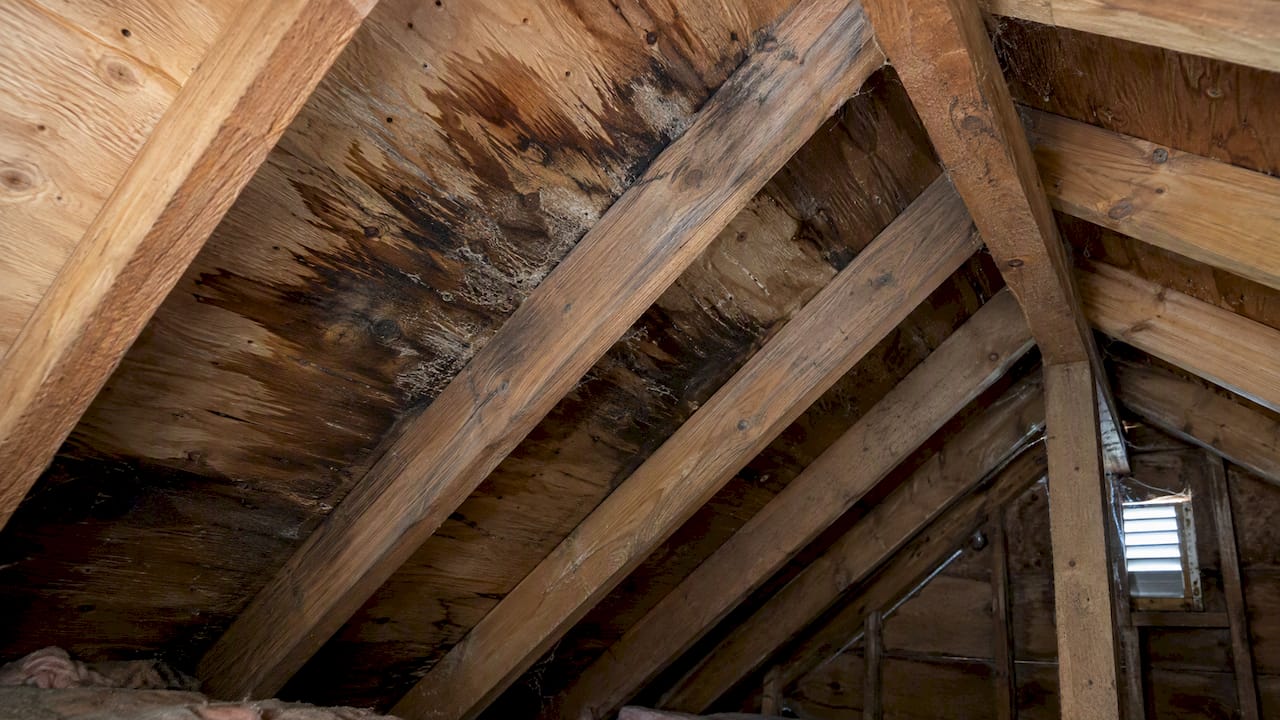
Electrical issues, like outdated panels, knob-and-tube wiring in older homes, or missing GFCI outlets, are common in Maine’s older housing stock and tend to get fixed rather than credited, since lenders sometimes flag them directly.
Heating system age and oil tank condition come up often in homes that still use oil heat. Sellers frequently agree to service or replace a failing furnace rather than lose the sale, particularly heading into a Maine winter.
Minor items, like a loose handrail, a cracked window pane, or a dripping faucet, rarely result in formal addenda. Most buyers and sellers resolve these informally or simply let them go rather than risk renegotiating the deal over small-dollar fixes. Sellers tend to respond most favorably to requests tied to safety or financing requirements, and least favorably to cosmetic wish lists submitted alongside the real issues.
The impact of inspection contingencies on offer strength and seller perception in Maine
An inspection contingency protects you, but it can also make your offer look less certain to a seller, especially in a multiple-offer situation. Sellers and their agents often read a broad, open-ended inspection contingency as more risk of renegotiation or a late fall-through.
Some buyers narrow the scope of their contingency, for example limiting it to major structural, safety, or environmental issues rather than every item on the report, to stay competitive while still protecting against the findings that matter most. This approach keeps your offer attractive without giving up protection against the defects most likely to affect your financing or your safety.
Sellers generally view a shorter inspection period and a buyer who schedules quickly as signs of a serious, organized purchase. Dragging out scheduling, or submitting a long list of minor repair requests, can undercut the goodwill a strong initial offer built.
Guidance on choosing qualified home inspectors familiar with Maine properties
Maine’s housing stock includes a wide mix of older farmhouses, coastal camps, and newer construction, and an inspector who regularly works in your specific town or region will recognize issues that a generalist might miss. Ask any inspector you’re considering how long they’ve worked in Maine and whether they routinely handle the systems your property has, such as private wells, septic systems, or antique heating setups.
Confirm the inspector carries relevant licensing and ask directly what their report includes: photos, a severity rating for each item, and a realistic timeline for delivery. A clear set of vetting questions before you hire anyone can save you from a rushed or generic report when your contingency clock is already running.
Buyer attendance works best when paired with a thorough inspector, since you can ask questions in real time about anything from roof flashing to the condition of a 1920s electrical panel.
What happens if deadlines in the inspection contingency are missed or extended
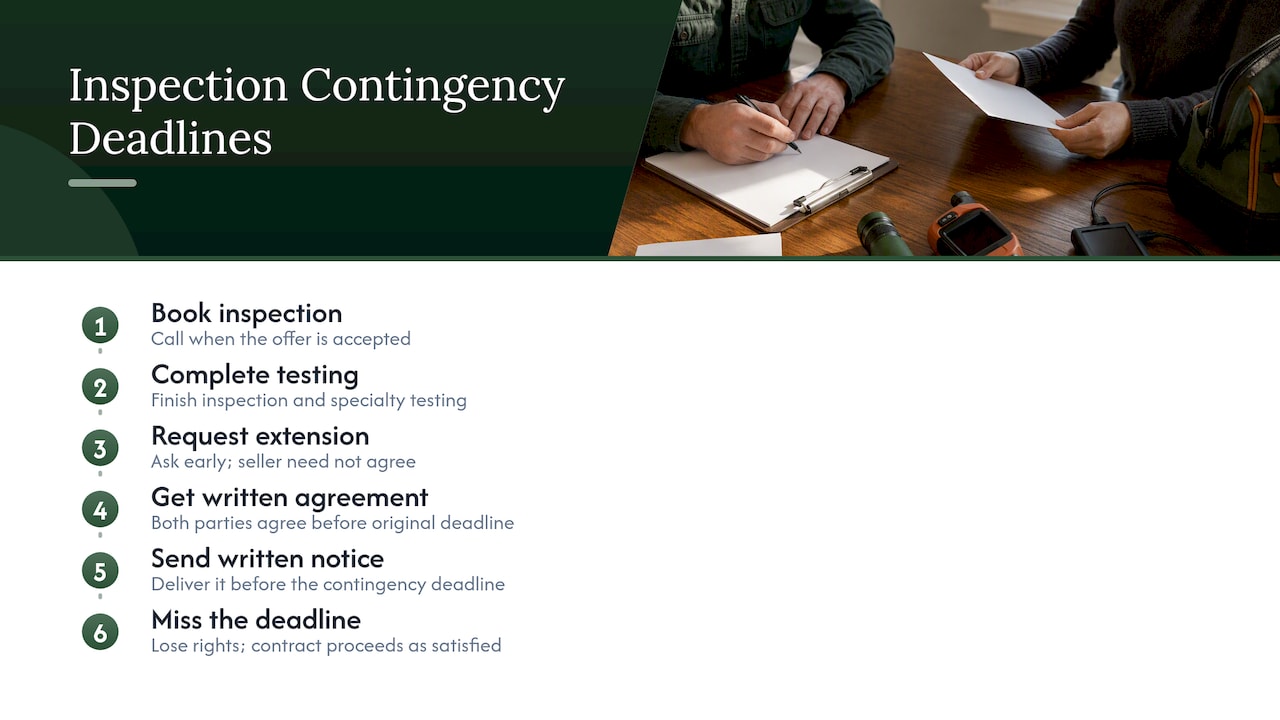
If your written notice does not reach the seller before the contingency deadline, you typically lose your contractual right to terminate or negotiate based on the inspection, even if the report revealed serious problems. The contract generally proceeds as if the contingency were satisfied.
Extensions are possible, but only if both parties agree in writing before the original deadline passes. A seller has no obligation to grant extra time, so if your inspector or a specialty tester cannot complete their work in time, your agent needs to request the extension early rather than waiting until the last day.
This is why scheduling discipline matters more than almost anything else in this process. Calling for an inspection appointment the moment your offer is accepted, rather than waiting for the paperwork to finalize, is often what keeps your rights intact.
How inspection contingency processes differ for unique Maine property types
Seasonal and vacation properties, common along Maine’s coast and lakes, often come with systems that sit idle for months, like a closed-up well, a winterized heating system, or a septic tank that has not been pumped recently. Testing these properly sometimes requires extra time to bring a system back online before it can be evaluated, which makes early scheduling even more important.
Older and historic homes present their own challenges, from knob-and-tube wiring to original plaster, fieldstone foundations, and lead-based paint in homes built before 1978. Federal rules give buyers of pre-1978 housing a separate 10-day period to test for lead hazards, which runs alongside, not instead of, your general inspection contingency.
Properties with private wells also warrant a dedicated look, since water quality and flow rate can vary significantly from one well to the next. Certified well water testing before closing is worth the extra step on any property that relies on one.

How an experienced Maine buyer’s agent applies inspection contingencies
The pattern is consistent: the buyers who protect themselves best are the ones who move fast and communicate in writing. A workflow that holds up involves coordinating the inspector, well tester, and septic company in the same week, then summarizing findings into a clear, prioritized addendum rather than a long list that invites a seller to reject everything.
Knowing when to push for termination versus negotiation comes down to severity. A failing roof or compromised foundation points toward renegotiation or exit. A worn faucet does not.
— David
Hire RealtorMaine to manage inspections, addenda, and negotiations
Coordinating inspectors, reading reports accurately, and drafting an addendum that actually protects your earnest money is easier with someone who does it regularly. We handle buyer representation, including scheduling vendors, reviewing contract language, and negotiating repair requests or credits so the deadlines in your contract work for you instead of against you.

Whether you’re buying your first home, a seasonal property, or an investment, we can walk you through the inspection process from the signed offer to the closing table. Get started with RealtorMaine today.
FAQ
Is a home inspection a contingency?
A home inspection itself is not a contingency. The contingency is the contract clause that gives you the right to conduct that inspection and respond within a set deadline before you’re bound to the purchase.
Does Maine require inspection?
Maine does not require a home inspection by law. Sellers must provide a Property Disclosure Statement under Title 33 §173, but that disclosure is not a warranty and does not substitute for an independent inspection.
Does the buyer have to be present during an inspection?
Buyers are not legally required to attend, but local inspectors recommend it because being there helps you understand the severity of any findings and ask questions directly, which supports better negotiation decisions afterward.
How much is it to get an inspection sticker in Maine?
A vehicle safety inspection sticker in Maine is a separate matter from home inspections, with the standard fee capped at $12.50. Home inspection costs are a different due-diligence expense and are not set by the state.
Sources
- Title 33 §173 — Maine Legislature
- Maine home inspection: costs, what gets flagged, and what to do next — First Home Start Guide
- Maine Realtors — forms and disclosure Q&A
- 5 Tides Home Inspections — service pages