
You can buy a camp in Maine this year, but whether the purchase goes smoothly depends on three things: the property type, the shoreland and permitting rules that apply, and the condition of the septic and well. Before you make an offer, line up a local buyer’s agent and order a well test, a septic review, and a title and access check. Two places anchor those checks: the Maine Bureau of Parks and Lands for public-land rules, and your municipality’s shoreland conversion permit office for seasonal-to-year-round questions.
TL;DR:
- Recent listings put updated lakeside camps under $400,000 and historic sporting camps near $1.1 million; a $175,000 camp lingered unsold for nearly three years.
- Maine requires a seasonal conversion permit before a camp can legally become a permanent home; approval depends on septic compliance or a legal replacement system.
- Summer visits can miss access blocked by snow and roof, foundation, or driveway damage; inspect the road in winter if you plan cold season use.
- Seasonal camps may require specialized insurance, and insurers can limit new policies during peak wildfire or storm season, so begin coverage discussions after offer acceptance.
Table of Contents
- Types of camps and land you’ll find across Maine
- What to budget: price ranges, taxes and ongoing costs
- Infrastructure, septic and well rules to verify early
- How location and winter access shape value and resale
- Inspection and due-diligence checklist before you close
- How the buying process unfolds from search to closing
- What a Maine REALTOR® sees in camp transactions
- Insurance considerations for camps in Maine
- The checklist matters more than the listing photos
- How we help you find and close on the right Maine camp
- FAQ
- Sources
Types of camps and land you’ll find across Maine
Camp shopping in Maine usually sorts into four categories, and each one carries a different cost and workload.
- Waterfront camps can attract strong buyer interest, and some sit within associations that add shared dues or boat-launch rules.
- Inland or off-grid cabins cost less upfront but often need a generator, a new septic system, or a drilled well before they’re comfortable year-round.
- Sporting camps and compounds are historic, multi-building properties that can run well past $1 million and sometimes include annual shared-maintenance fees for common buildings or trails.
- Raw parcels sold for camping can be a lower-cost entry point, but you’ll handle permitting, road access, and utility installation yourself.
A weekend getaway buyer usually does fine with an inland cabin or a smaller waterfront lot. Someone planning short-term rentals may prefer lakefront or near-trail parcels, though rental demand and rates vary. Buyers eyeing a multi-cabin compound need the deepest inspection work, since older sporting camps often carry decades of deferred maintenance on wells, septic fields, and outbuildings.
What to budget: price ranges, taxes and ongoing costs
Maine camp prices span a wide range, and recent listings show the spread clearly. Regional reporting found updated lakeside camps listed under $400,000, some with modern amenities or rental histories that support the asking price. At the other end, a historic Penobscot County sporting camp that once hosted well-known athletes listed near $1.1 million, reflecting the premium that large, historic compounds command.
A camp priced well below market can still sit unsold for years when infrastructure or access is weak, as reporting on a $175,000 Maine camp that spent nearly three years on the market shows.
Beyond the purchase price, plan for:
- Annual property taxes, which vary by town and by whether the camp is classified seasonal or year-round.
- Fuel, propane, or firewood costs if the camp isn’t connected to a utility grid.
- Shared road maintenance or association dues on compound-style and some waterfront properties.
Closing costs and financing requirements vary. Financing a seasonal camp can be trickier than financing a standard home: some lenders require evidence of year-round habitability, including a compliant septic and heat source, before approving a conventional mortgage.
Infrastructure, septic and well rules to verify early
Most camp problems trace back to three things: the septic system, the well, and the shoreland zone the property sits in. Check all three before you get attached to a listing.
If you want to live in the camp year-round rather than seasonally, Maine requires a seasonal conversion permit before the switch is legal. The rules call for proof that the subsurface wastewater system substantially complies with current standards, or for a legal replacement system to be installed first. Some older camps may have inadequate septic or well systems, so check their condition and budget for needed repairs or replacement.
Shoreland zoning adds another layer: setbacks from the water, limits on lot coverage, and in some areas, Land Use Planning Commission restrictions that can limit what you’re allowed to build or rebuild. Some development areas permit only one dwelling or one camping site per lot.
- Confirm the property’s current permitted use with the town office before bidding.
- Ask for any existing septic design or approval paperwork.
- Verify setback compliance if you plan to expand or rebuild.
Pro Tip: Call the town code enforcement officer before you write an offer, not after. An early call can help you identify potential permit issues.
How location and winter access shape value and resale
Distance from hospitals, grocery stores, and paved roads affects both how you’ll use a camp and how fast it sells. Camps close to year-round services tend to move faster and hold value better than remote parcels, where buyers have to weigh the inconvenience against the privacy.
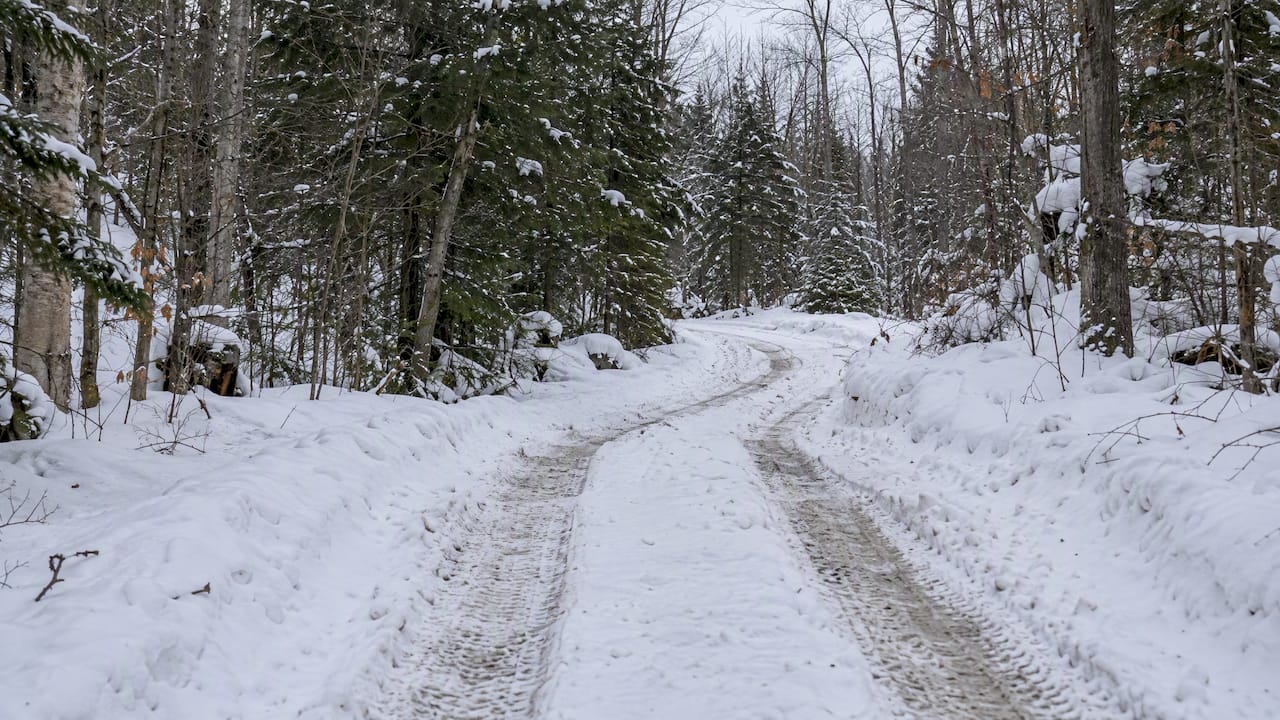
Winter access deserves its own visit before you buy. A camp that looks charming in July can be unreachable, or at least unplowed, in January, and snow cover hides roof issues, foundation cracks, and driveway washouts that a summer walkthrough will miss. If winter access matters to your plans, drive the road yourself during the season.
Proximity to boat launches, hiking trails, or islands may appeal to buyers who prioritize recreation, even when it means a longer drive to the nearest pharmacy. Know which tradeoff matters more to you before you shop.
Inspection and due-diligence checklist before you close
Work through these in order, since later steps depend on what earlier ones turn up.
- Order a certified well-water test to check for bacteria, arsenic, and other contaminants common in Maine groundwater.
- Get a septic inspection or soil test, or a written replacement cost estimate if the system is undersized or failing.
- Schedule a full structural inspection covering the foundation, roof, and any additions built without permits.
- Have the electrical system checked, especially in older camps wired decades ago for lighter loads.
Beyond the physical building, review the deed for easements, shared rights-of-way, and shorefront boundary descriptions, since camp lots often have informal or decades-old boundary agreements. Pull municipal records to confirm past building permits, prior septic approvals, and whether any additions were built without one.
Pro Tip: Ask the seller directly whether any work was done without a permit. Unpermitted additions can complicate both insurance and resale.
How the buying process unfolds from search to closing
A camp purchase generally follows the same stages as a home sale, with a few extra checkpoints.
- Review listings and visit in person, ideally including a winter visit if the camp will see cold-season use.
- Make an offer with contingencies for inspection, septic, and well results.
- Complete inspections and permit checks, then negotiate repairs or a price adjustment based on findings.
- Close once financing, title, and permit questions are resolved.
Delays most often come from septic upgrade negotiations, slow municipal permit turnaround, or boundary disputes that surface during a survey. A realistic timeline runs anywhere from six weeks to several months, depending on how quickly inspections and permit reviews move. A buyer’s agent who knows the local permit offices and contractor network may help keep the process moving by coordinating inspections and municipal record requests in parallel.
What a Maine REALTOR® sees in camp transactions
Working in central and southern Maine real estate, I’ve watched remote camps sit on the market far longer than comparable homes closer to services, usually because buyers underestimate infrastructure costs until an inspection forces the issue. That gap creates real negotiating room for prepared buyers. Before waiving any contingency, coordinate a certified well test and a septic estimate yourself rather than relying on the seller’s disclosure, and use local knowledge of water depth and shoreline quality to judge whether a waterfront asking price is fair.
Insurance considerations for camps in Maine
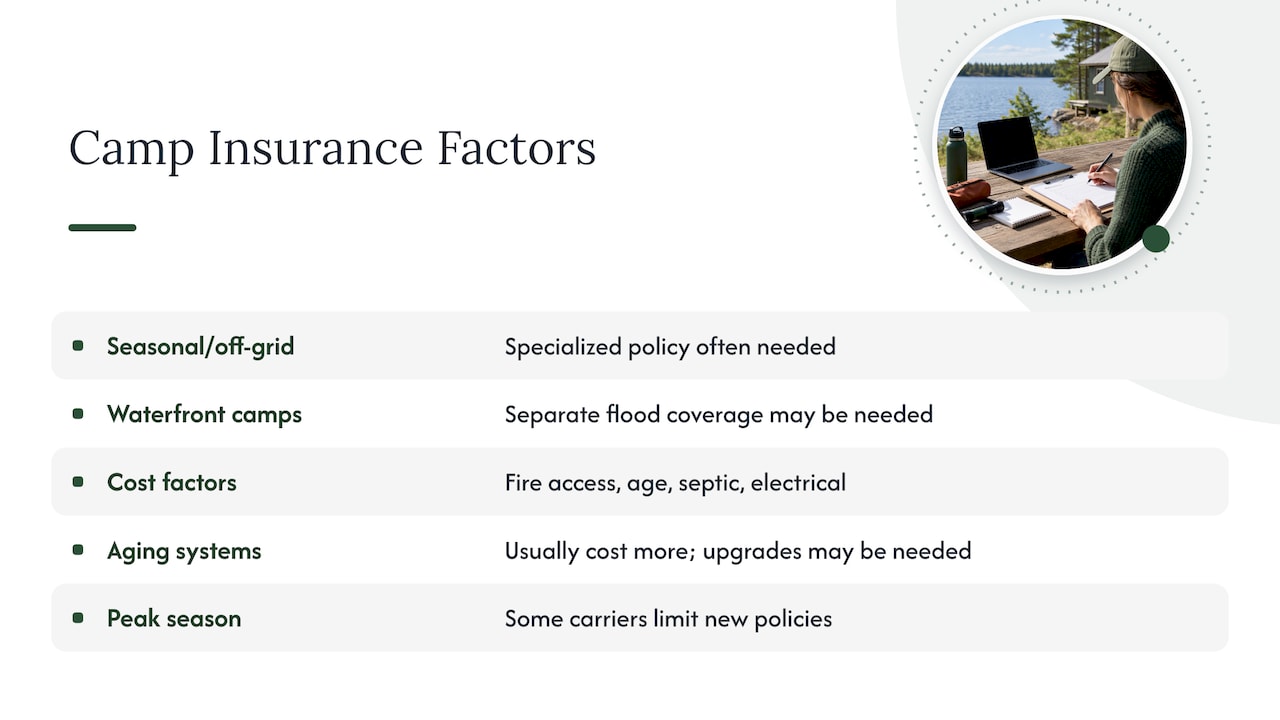
Camp insurance differs from a standard homeowner’s policy in a few important ways. Seasonal and off-grid camps often need a specialized policy, since many standard insurers limit or exclude coverage for structures without year-round occupancy, a monitored heat source, or a conventional septic system. Waterfront camps may also need separate flood coverage, particularly if the property sits in a mapped flood zone near a lake or river.
Cost factors include the camp’s distance from a fire department or hydrant, its construction age, and whether the septic and electrical systems meet current standards. A camp with an aging septic system or knob-and-tube wiring will usually cost more to insure, if an insurer will cover it at all without upgrades first. If the septic system is a known problem before you buy, it’s worth understanding your options early, including how sellers handle septic issues when a property needs work before it can sell or insure easily.
Availability can also be seasonal: some carriers limit new policies during peak wildfire or storm season, so it helps to start the insurance conversation as soon as your offer is accepted rather than waiting until closing week.
The checklist matters more than the listing photos
A common mistake buyers can make is falling for a camp’s view before checking what’s underneath it. A stunning lakefront sunset doesn’t tell you whether the septic field is failing or whether the access road washes out every spring. Conventional advice tends to focus on price and location, but in Maine, infrastructure condition is often the bigger swing factor in both cost and resale timeline.
My honest read: the reporting on a $175,000 camp sitting unsold for nearly three years backs this up. Price alone didn’t move that property. A septic system, a well, and a winter-access check can require upfront spending, but may help you avoid inheriting someone else’s deferred maintenance. Run the checklist before you fall in love with the view, not after.
— David
How we help you find and close on the right Maine camp
We handle camp searches across central and southern Maine the same way we handle any home purchase: with pricing analysis and communication that doesn’t stop at 5 p.m.

- We help you compare waterfront, inland, and sporting-camp options against your actual budget and goals.
- We coordinate well testing, septic review, and municipal permit checks before you waive contingencies.
- We negotiate on your behalf using local knowledge of what comparable camps have actually sold for.
If you’re ready to start looking at Vacation / Seasonal Property options in Maine, reach out and we’ll set up a consultation or a listing alert tailored to what you’re after.
FAQ
Is boondocking legal in Maine?
Dispersed camping on Maine public lands is allowed, but it’s capped at 14 days within any 45-day period without prior written permission from the Bureau of Parks and Lands. Campers must follow carry-in, carry-out waste rules, and power equipment such as generators is prohibited near campsites.
How much is a seasonal spot at a campground?
Pricing for seasonal campground spots in Maine varies widely by location, amenities, and proximity to water or trails, and no statewide figure is published. Contacting individual campgrounds or checking listing platforms directly gives the most accurate current pricing.
Which state in the US is the best to buy property in?
There’s no single best state for property purchases since it depends on your budget, lifestyle goals, and whether you want a seasonal camp or a year-round home. For buyers drawn to lakes, forests, and a strong seasonal rental market, Maine’s camp and waterfront properties offer a combination that’s hard to match in more built-up states.
Where is the cheapest place to buy land in Maine?
Raw, inland parcels away from waterfront and major towns tend to offer the lowest prices per acre in Maine. Listings on platforms covering Maine camping land show meaningful price variation, with coastal and lakefront acreage commanding a premium over inland lots.
Do I need a special permit to convert a seasonal camp to year-round use?
Yes. Maine requires a seasonal conversion permit before converting a seasonal dwelling to year-round use, and approval typically requires proof that the wastewater system substantially complies with current rules or that a legal replacement has been installed.
Sources
- Maine
- See 3 lakeside camps in Maine you can afford
- A Penobscot County sporting camp that hosted star athletes is selling for $1M