If you own a private well in Maine, order a certified test kit from the Maine Health and Environmental Testing Laboratory or a state-accredited lab now, or call Maine CDC if you need guidance first. Test annually for bacteria and nitrates, and add a broader panel for arsenic, radon, and uranium every three to five years. If anything comes back above the recommended guidance, follow Maine CDC’s next steps for treatment and get a retest scheduled before you drink the water again.
TL;DR:
- Private well owners in Maine should perform annual testing for bacteria and nitrates, and conduct a broader chemical panel every three to five years.
- Using accredited labs like Maine HETL or private options such as Chanalytical offers faster results, especially for radon and PFAS, but requires careful sample timing and logistics.
- Costs for testing range from $30 to $120 per round, with priority on basic annual tests, and Maine CDC offers free guidance to help buyers and sellers coordinate testing before transactions.
- Proper sample collection is crucial; samples must be collected early in the week, following detailed instructions, and shipped immediately to avoid rejection or delays.
- Testing should be viewed as ongoing maintenance rather than a one-time task, with retesting critical after any well work, treatment, or detectable changes in water quality.
Table of Contents
- Where to Get Certified Well Water Testing in Maine
- What to Test For and How Often
- How to Collect and Submit a Valid Sample
- Costs and Free Testing Options in Maine
- Reading Your Results and What to Do Next
- A Maine Realtor’s View on Testing Before You Buy or Sell
- What Well Owners Get Wrong About Testing
- Coordinating Testing During Your Home Purchase or Sale
- Sources
- FAQ
Where to Get Certified Well Water Testing in Maine
Maine’s own lab is the default starting point. The Maine Health and Environmental Testing Laboratory sells testing kits directly through its web shop, and its staff can also point you toward other state-accredited labs if you’d rather use one closer to home.
Private labs fill a real gap. Chanalytical Laboratories offers homeowner-friendly kits with drop-off locations across Maine, including panels that cover radon and PFAS screening, tests the state lab doesn’t always turn around as quickly.
How to choose between them comes down to three questions:
- Turnaround time. Private labs sometimes process results faster than the state lab during high-demand seasons.
- What you’re testing for. PFAS and radon panels are more consistently available through private labs like Chanalytical.
- Cost and convenience. Compare drop-off locations and mail-in windows before you commit.
Sample logistics matter more than most people expect. The HETL WebShop is explicit about drop-off hours and sample receipt windows, and the lab is closed weekends and holidays. Miss that window and your sample can be rejected, which means starting over.
What to Test For and How Often
Maine’s testing calendar splits into two tiers, and mixing them up is the most common mistake well owners make.
Every year:
- Total coliform bacteria
- E. coli
- Nitrate and nitrite
Every three to five years:
- Arsenic
- Uranium
- Radon
- A standard chemical panel covering lead, pH, hardness, iron, and manganese
That schedule comes straight from the Maine HETL’s own testing guidance, and University of Maine Cooperative Extension backs the same intervals, which tells you this isn’t a marketing recommendation from one lab trying to sell more kits. It’s the actual consensus.
Add PFAS testing if you live near a known contamination site, an old landfill, or an area under a local advisory. And there are specific moments that should trigger testing outside the normal schedule: pregnancy in the household, a sudden change in taste, smell, or color, any work done on the well itself, or a home sale in progress.
How to Collect and Submit a Valid Sample
A rejected sample wastes your money and your week. Follow this sequence:
- Order the correct kit for what you’re testing and read the instructions before you touch a faucet.
- Collect early in the week. Avoid Fridays, weekends, and holidays since the lab won’t be open to receive your sample on time.
- Use the tap the instructions specify. For lead, that usually means a first-draw sample before you run the water, not after.
- Fill containers to the line, label them clearly, and seal tightly.
- Keep samples cool if the kit requires it, usually in a cooler with ice.
- Complete every form in the kit, including any chain-of-custody paperwork.
- Ship or drop off immediately. Confirm the lab has received it.
Pro Tip: Collect your sample Monday morning, not Thursday afternoon. State labs typically require samples to arrive within a tight window and won’t accept them over a weekend, so a Thursday collection often means a wasted trip and a delayed result.
The single biggest mistake: letting a sample sit in a car overnight because you missed the drop-off window.
Costs and Free Testing Options in Maine
Budget realistically before you order anything. Maine CDC’s own well water brochure lays out typical ranges: a basic bacterial test runs $30 to $60, a standard water panel runs $70 to $120, and radon testing runs $60 to $80. Prices shift depending on the lab and exactly which analytes are included.
If cost is tight, prioritize like this:
- Start with the annual basics: bacteria and nitrate.
- Add the full chemical panel once every three to five years rather than annually.
- Call Maine CDC before you order anything. Its staff provide free technical assistance and can help you figure out what you actually need, which sometimes saves you from paying for tests you don’t.
- Confirm any lab you use is accredited before paying for a kit.
Reading Your Results and What to Do Next
A positive bacterial result means stop drinking the water immediately. Switch to bottled water or boil per Maine CDC’s guidance until you’ve made a fix and retested clean.
Chemical exceedances play out differently. Arsenic, uranium, or radon above recommended levels usually calls for a treatment system and, in many cases, a referral to a water treatment specialist rather than a quick fix. Retest after any treatment or well repair to confirm the fix actually worked before you consider the problem solved.
A few things worth remembering:
- Maine doesn’t regulate private wells, which means the entire testing and treatment burden sits with the homeowner, not any agency.
- Keep every result on file. If you sell your home, buyers and their agents will ask for recent test records, and treatment system paperwork often comes with its own warranty documentation worth saving.
- When in doubt about what a result means, call Maine CDC rather than guessing.
A Maine Realtor’s View on Testing Before You Buy or Sell
Fresh test results change how a deal moves. A buyer with an arsenic result in hand has real negotiating leverage; a seller who tests early avoids a surprise that stalls closing. I’ve watched offers fall apart over water quality that could have been addressed weeks earlier with a simple test.
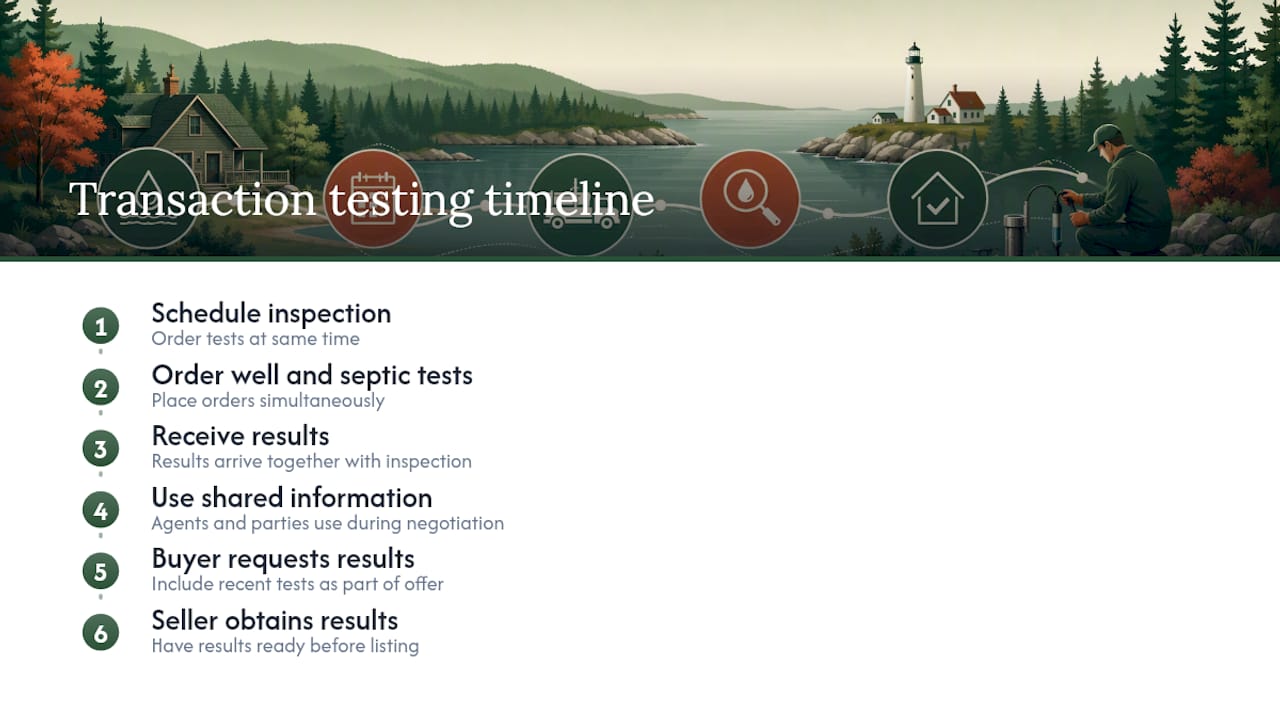
Timing matters as much as the result itself. Order well water and septic tests at the same time you schedule your home inspection, not after. That way results land together, and everyone, agents included, works from the same information during negotiations. Buyers should request recent test results as part of any offer; sellers should have results ready before listing rather than reacting once a buyer asks. Coordinating that timeline is exactly the kind of detail agents track closely during a transaction.
What Well Owners Get Wrong About Testing
Most well owners treat testing as a one-time chore instead of a maintenance habit, and that’s backward. The real risk isn’t the first test. It’s the fifth year nobody retested, because life got busy and the water still looked fine.
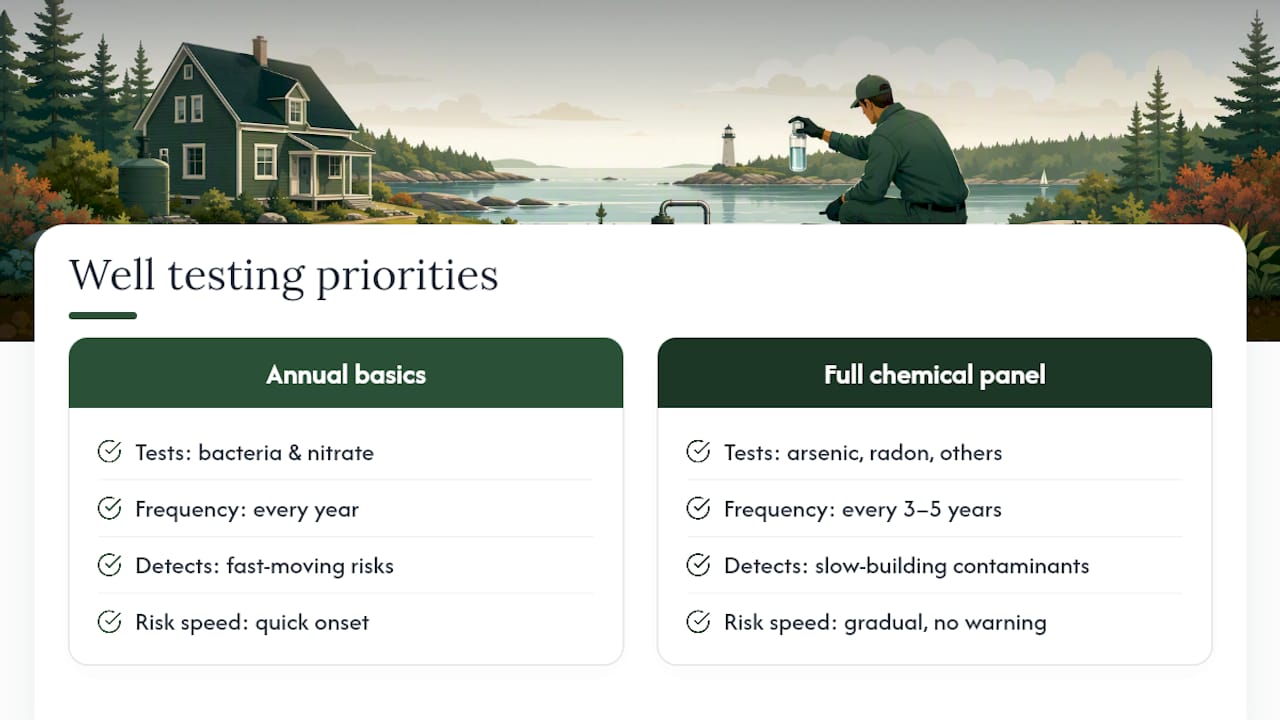
Here’s what the guidance actually supports: annual bacteria and nitrate testing catches the fast-moving risks, while the three to five year chemical panel catches the slow ones like arsenic and radon that build quietly with no taste or smell to warn you. Skipping the second tier because the water “seems fine” is the single most common failure I see, and it’s also the easiest one to fix. Prioritize the annual basics if money is tight, but don’t let five years pass without the full panel. If you’re buying or selling, treat testing as a scheduling problem, not an afterthought. Get it done early enough that results are in hand before anyone’s negotiating.
— David
Coordinating Testing During Your Home Purchase or Sale
Some real estate agents offer coordination between well testing, septic inspections, and closing timelines, plus responsive communication beyond standard office hours when results come back and clients need answers.

Whether you’re buying and want test results in hand before you make an offer, or selling and want to head off surprises before a buyer’s inspector shows up, David Haydym helps manage the timeline and the documents so nothing stalls your closing. That includes trusted local referrals for labs and inspectors, and negotiation support once results are in. For sellers specifically, coordinating inspections before listing, the same logic behind pre-listing inspection playbooks used elsewhere, avoids the kind of last-minute scramble that kills deals. Reach out through RealtorMaine to talk through your timeline and get your buying or selling process moving.
This article is general information, not a substitute for advice from a qualified doctor. Consult a qualified healthcare professional about your own circumstances before acting on anything here.
Sources
- Testing private well water — Maine Health and Environmental Testing Laboratory
- Maine Private Well and Radiological Water and Air Test — Maine HETL WebShop
FAQ
Where Can I Bring My Well Water to Be Tested in Maine?
You can order a kit and drop off samples through the Maine Health and Environmental Testing Laboratory, or use a private accredited lab like Chanalytical, which offers drop-off locations across the state. Call Maine CDC first if you’re unsure which option fits your situation.
How Much Does a Water Test Cost in Maine?
Costs vary by test type. Maine CDC’s guidance lists basic bacterial tests at $30 to $60, standard panels at $70 to $120, and radon testing at $60 to $80, with the final price depending on the lab and which analytes are included.
How Much Does It Cost to Test Well Water Overall?
If you’re budgeting for both the annual basics and the periodic full panel, expect to spend roughly $30 to $120 per testing round depending on scope, with radon and other specialty tests adding to that. Maine CDC can help you prioritize which tests matter most for your budget.
Does Home Depot Test Well Water for Free?
Home Depot does not offer certified free well water testing, and retail test strips sold there don’t meet the standard needed for accurate bacteria, arsenic, or radon results. For a valid result recognized in Maine, use an accredited lab such as HETL or Chanalytical rather than a retail kit.
How Often Should I Test My Maine Well Water?
Test annually for total coliform, E. coli, and nitrate/nitrite, and expand to arsenic, uranium, radon, and a full chemical panel every three to five years, per Maine HETL guidance. Test outside that schedule if you’re pregnant, notice a change in water quality, had recent well work done, or are buying or selling a home.