
The typical Maine HOA or condo fee is about $280 a month, according to reports collected by HOA Costs, and most associations charge somewhere between $60 and $660. The number matters less than what sits behind it. Maine does not regulate these fees, so the budget your future board has set is the only protection you have. This guide explains what drives the fee, what the law gives you as a buyer, and how to read an association’s finances before you make an offer.
TL;DR
- The median Maine HOA or condo fee is $280 a month, the range is roughly $60 to $660, and the average ($344) is pulled up by a few high-fee luxury condos.
- The state does not cap or regulate fees and does not require reserve studies, so you have to do the financial homework yourself.
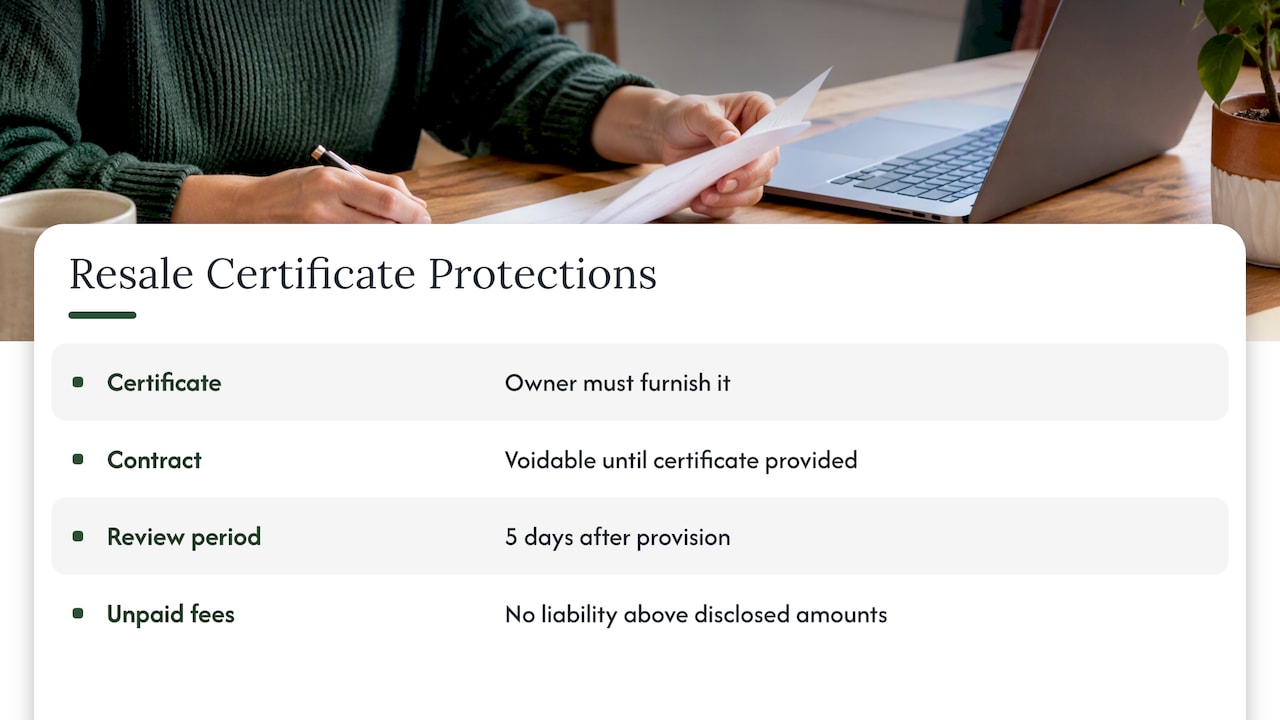
- Under Maine’s condominium law you are entitled to a resale certificate, and the contract can be voided until you receive it. You are not liable for unpaid dues beyond the amounts it discloses.
- A very low fee is not automatically a bargain. It can mean the reserve fund is thin and special assessments are coming.
Table of Contents
- What HOA fees cost in Maine
- What the fee actually covers
- Who sets the fee, and why nobody caps it
- Your legal protection as a buyer: the resale certificate
- What to review before you make an offer
- How a fee changes what you can afford
- Vacation homes, investment units and second homes
- Where HOA fees show up that aren’t called HOA fees
- Our perspective
- Working with a Realtor on a condo or HOA purchase
- Questions buyers ask
- Sources
What HOA fees cost in Maine
Maine has nearly 2,000 community associations, a mix of homeowner associations, condominiums and co-ops. The Community Associations Institute estimates that residents pay $278 million a year to maintain their properties, and its Maine fact sheet puts the same figure in the context of costs that would otherwise fall to local government.
For what an individual buyer will pay, the best public data we found is a crowd-sourced set of 254 reports:
| Measure | Monthly fee |
|---|---|
| Typical (median) | $280 |
| Common range | $60 to $660 |
| Average | $344 |
Treat these as a guide, not a quote. Other published state rankings come out lower or higher depending on how they sample, and a self-reported dataset leans toward the buildings whose owners chose to report. The only fee that counts is the one in the budget of the specific association you are considering.
Why the average sits above the median
A handful of full-service buildings, often in Portland, Falmouth or on the coast, carry fees far above the rest. They drag the average up while the median stays closer to what most owners pay. If you see a quoted “average” for Maine, ask whether it is a mean or a median.
What the fee actually covers
A fee is not a price list. It is the result of what the association has decided to take care of collectively. Two condos with the same monthly amount can cover very different things.
Common items include:
- Insurance on the common areas
- Lawn, landscaping and snow removal
- Driveway and private road maintenance
- Exterior upkeep such as roofs, siding and decks
- Trash removal, and sometimes water, sewer or heat
- A contribution to the reserve fund
- Management fees, if the association hires a company
You can see how one Maine association lays this out in the declaration of a Kittery condominium, which lists insurance, lawn care and driveway maintenance among the shared common expenses. Every declaration is different, which is why you read the one for your building.
Service charges on top of dues
Associations can also levy service charges for individual unit maintenance or for utility usage that is not billed directly by the provider. According to WGME’s reporting, these can work as a second, variable assessment. When you compare two units, ask whether heat, water or sewer is in the dues or billed separately.
Who sets the fee, and why nobody caps it
Maine has no state regulation of condo or HOA fees. Fee levels depend on a budget the board adopts, and the Maine Condominium Act lets the association adopt and amend budgets for revenues. Owners vote for the board, and the board answers to the owners, but nothing in state law says a fee must be a certain size.
That matters most when a building has deferred maintenance. Maine also does not require reserve studies or a minimum reserve balance. A board can keep dues low for years, then fund a new roof or repave a private road through a large special assessment. Legal experts quoted by WGME advise buyers to treat the missing reserve rules as a reason to do their own deep financial review.
A low fee can be a warning
Higher fees often signal a well-funded reserve account, while a fee that looks cheap may point to special assessments ahead, according to the analysis on HOA Costs. We see it the same way when we walk buyers through a building. A $180 fee with an empty reserve is usually a worse deal than a $320 fee with a healthy one.
Your legal protection as a buyer: the resale certificate
For condominiums, Maine law gives you a concrete tool. Under Title 33, section 1604-108, a unit owner must furnish the purchaser with a resale certificate from the association. The statute provides that the purchase contract is voidable until the certificate is provided and for 5 days afterward. It also provides that you are not liable for unpaid assessments or fees above the amounts disclosed in the certificate.
The certificate is where the association tells you, in writing, what you are walking into. Read it before you waive anything. For a deeper walkthrough, see our guide to Maine condo documents and the resale certificate.
Note that the statute covers condominiums under the Maine Condominium Act. A planned community with a homeowners association may have different documents and different rules, so confirm which structure applies to the home you are looking at. Our piece on HOA versus condo association dues at closing explains the difference.
What to review before you make an offer
If you remember one thing, make it this: ask for the documents early, and read them with the monthly fee in mind. Here is the order we suggest.
- The current budget. Look at what is funded and what is not. Check whether income covers expenses without borrowing.
- Reserve balance and any reserve study. Maine does not require one, so ask whether one exists and how recent it is.
- Meeting minutes for the last year or two. Look for talk of roof replacement, drainage, paving, litigation or unpaid dues.
- Special assessments, past and planned. Ask what was assessed, what is being discussed, and whether the board has taken out a loan.
- The declaration, bylaws and rules. These tell you about rental limits, pets, parking and who maintains what.
- Insurance. Confirm what the master policy covers and what you need on your own policy.
- Owner delinquency rate. A high share of unpaid dues puts pressure on the budget and on the other owners.
- The resale certificate. Compare its figures to everything above.
A checklist of HOA documents for condo and townhouse buyers is a useful second reference if you want to cross-check your list.
If you are financing with an FHA loan
FHA loans add a layer: the condominium project itself generally has to meet approval standards, and an association with weak finances can complicate that. We map the HUD requirements to Maine’s resale law in our FHA condo approval checklist. If you are a first-time buyer, our guide to qualifying as a first-time homebuyer in Maine covers the programs.
How a fee changes what you can afford
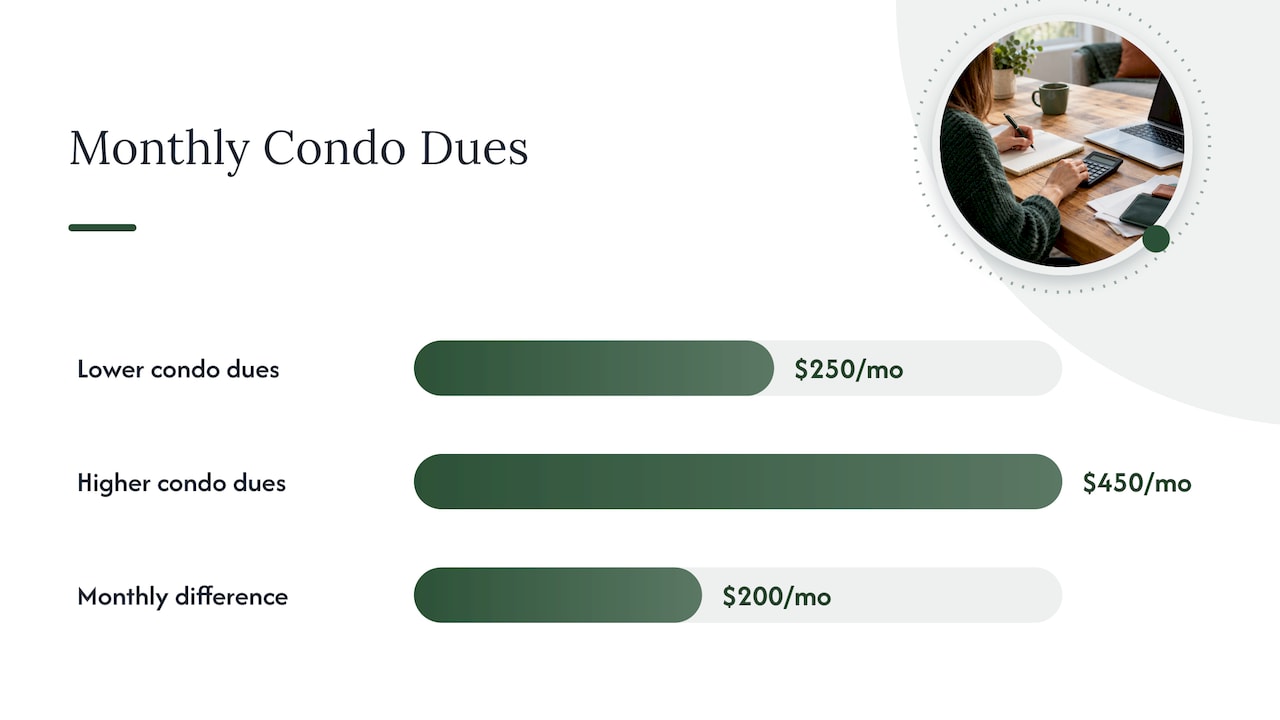
Lenders count association dues as part of your monthly housing cost, so a higher fee reduces the mortgage you can carry. Take a hypothetical: two condos list at the same price, one with a $250 fee and one with a $450 fee. The $200 difference is $2,400 a year. That is real money you either pay in dues or keep, and it should shape your offer.
Now reverse it. If the $450 building includes heat and hot water, and the $250 building does not, the gap may close entirely once winter bills arrive. Compare total monthly cost, not the fee line alone. Maine’s heating season is long, so this one matters.
Property tax is the other piece. If the home will be your primary residence, read about the $25,000 homestead exemption and Maine property taxes.
Vacation homes, investment units and second homes
Owners of seasonal and investment units face a few extra questions. Associations may limit short-term rentals or rentals in general, and some set higher fees for coastal buildings with shared amenities. Read the rental rules in the declaration before you build a pro forma.
There is also ongoing political pressure around taxing second homes. A Sun Journal opinion piece from May 2026 argues that such taxes raise constitutional problems, and that the legal distinction tends to fall between primary residences with homestead status and everything else. Nothing is settled, so keep a margin in your numbers and talk to a tax professional about your own situation. If you are looking at short-term rentals in Portland specifically, see our notes on Portland rental rules and due diligence.
Where HOA fees show up that aren’t called HOA fees
Some Maine homes outside condos still carry shared costs. Private roads are the common example: neighbors may owe a share of plowing and repair under a road agreement, with no formal HOA at all. Lakefront communities can have similar arrangements for docks and access. If a property sits on a private road, read how Maine private road agreements work before you close, since a missing agreement can delay closing.
Our perspective
We have worked in Maine real estate for 20 years, and the same pattern repeats. Buyers compare list prices and fees, then discover the real difference in the paperwork. The fee tells you what the board charges today. The reserve and the minutes tell you what the board has been avoiding.
Our approach is to put the documents in front of you early, in plain language, and let you decide without pressure. We would rather lose a sale than have you close on a building with a roof problem nobody mentioned. That is what unbiased advice means in practice. When a building looks financially weak, we say so, and we show you the numbers that led us there.
We also keep our phones on after standard hours, because document deadlines do not follow office hours. If the resale certificate arrives on a Friday evening, you should not wait until Monday to understand it.
— David
Working with a Realtor on a condo or HOA purchase
If you are weighing a condo, townhouse or a home in a planned community in central or southern Maine, we can help you request the right documents, read them with you and price your offer around what we find. We also represent sellers who want to prepare an association packet ahead of listing. See how we work with buyers and sellers at RealtorMaine.
Questions buyers ask
Does Maine regulate HOA or condo fees?
No. Legal experts and WGME’s reporting describe Maine fees as unregulated by the state, set through board-adopted budgets. The Maine Condominium Act governs how associations operate and what they must disclose, but it does not cap what they charge.
Can I back out if the association documents look bad?
For a condominium resale, the contract is voidable until you receive the resale certificate and for 5 days afterward, under Title 33, section 1604-108. Your purchase contract may contain other deadlines, so read it carefully and ask your Realtor or a Maine real estate attorney how they interact.
Are unpaid fees from the previous owner my problem?
Under the same statute, you are not liable for unpaid assessments or fees exceeding the amounts disclosed in the resale certificate. That is why the certificate’s accuracy matters, and why you should compare it against the budget and minutes.
Is a lower HOA fee always better?
No. A low fee can mean the association is not saving enough for big repairs, which can lead to special assessments for items like roofs, roads or drainage. Compare the fee against the reserve balance and the age of the building’s major systems.
Sources
- Maine HOA fees, HOA Costs
- Are monthly condo dues regulated in Maine? WGME
- Maine facts and figures, Community Associations Institute Foundation
- A Guide to Maine Reserve Study Laws, SmartProperty
- Title 33, section 1604-108: Resales of units, Maine Legislature
- Maine Condominium Act, Maine Legislature
- Regency Woods Condominium Declaration, Kittery
- Taxing homeowners from away, Sun Journal
- HOA documents checklist for condo and townhouse buyers, Realtify