
Start by confirming exactly what kind of waterfront you are buying, then check the FEMA flood map, the town’s shoreland zoning rules, and the septic system before you fall in love with the view. Maine DEP guidance and FEMA’s Flood Map Service Center cover the risk side, while Maine Listings data anchors price expectations. Add flood insurance quotes, financing, and a local REALTOR® to run the search.
TL;DR:
- Search separately for oceanfront, tidal frontage, deep water access, and deeded beach rights, then verify access terms in the deed because listings often blur them.
- Zone X does not eliminate flood risk; get an insurance quote for the property and check elevation, wave exposure, and the LiMWA boundary.
- Maine shoreland rules usually cover land within 250 feet of certain waters, but towns may impose stricter limits on permits and rebuilding.
- Maine’s median listing price was $450,000 in September 2026, but waterfront costs vary by frontage; budget separately for flood insurance, septic work, and dock upkeep.
- Keep title and access review, septic and well testing, flood insurance availability, and essential permits as offer contingencies; inspections and underwriting can extend closing timelines.
Table of Contents
- Where to find coastal and waterfront listings in Maine
- Which Maine coastal region fits you best?
- What do Maine coastal properties cost?
- Which coastal risks should you inspect before you buy?
- How does shoreland zoning shape what you can build?
- A step-by-step checklist for buying coastal property in Maine
- What 20 years of Maine coastal deals taught me
- How our REALTOR® services help you buy a Maine coastal home
- FAQ
- Sources
Where to find coastal and waterfront listings in Maine
Coastal listings show up in three places: broker websites, the statewide MLS feeds that major portals pull from, and the agent network that never reaches a portal at all. Local broker pages often present the cleanest view of active waterfront inventory, and a page like this waterfront listings page shows how a broker groups properties and details in one place.
Wording matters more than most buyers expect. “Waterfront” is too broad to be useful. A listing might mean true oceanfront, tidal frontage on a cove or river, deep-water access with a dock, a shared right of way to a beach, or a lakefront lot miles from the ocean. Each one changes your insurance, your permitting options, your boating use, and your resale audience. Ask the listing agent which one applies, and read the deed language rather than the marketing copy.
Here is how we suggest you work the search:
- Set saved searches with filters for oceanfront, waterfront, tidal frontage, and deeded access, then run a second search without those filters to catch listings that are poorly tagged.
- Create alerts for every town on your shortlist so you see new listings the day they appear.
- Ask the listing agent for septic records, elevation information, and any shoreline structure permits before you schedule a showing.
- Have your REALTOR® check for off-market and coming-soon properties, which often move through agent conversations first.
- Confirm in writing whether access is deeded to you alone or shared with neighbors or an association.
Seasonality shapes both inventory and leverage. Summer brings the largest wave of new coastal listings, because sellers want buyers to see the water in its best light. Winter slows showings sharply. A property still sitting in the off-season often signals a seller who is more willing to negotiate, though you also see fewer options to choose from. The September 2026 Maine market coverage is a reminder that conditions shift by region and by month, so treat any generalization with caution until your agent checks the specific town.
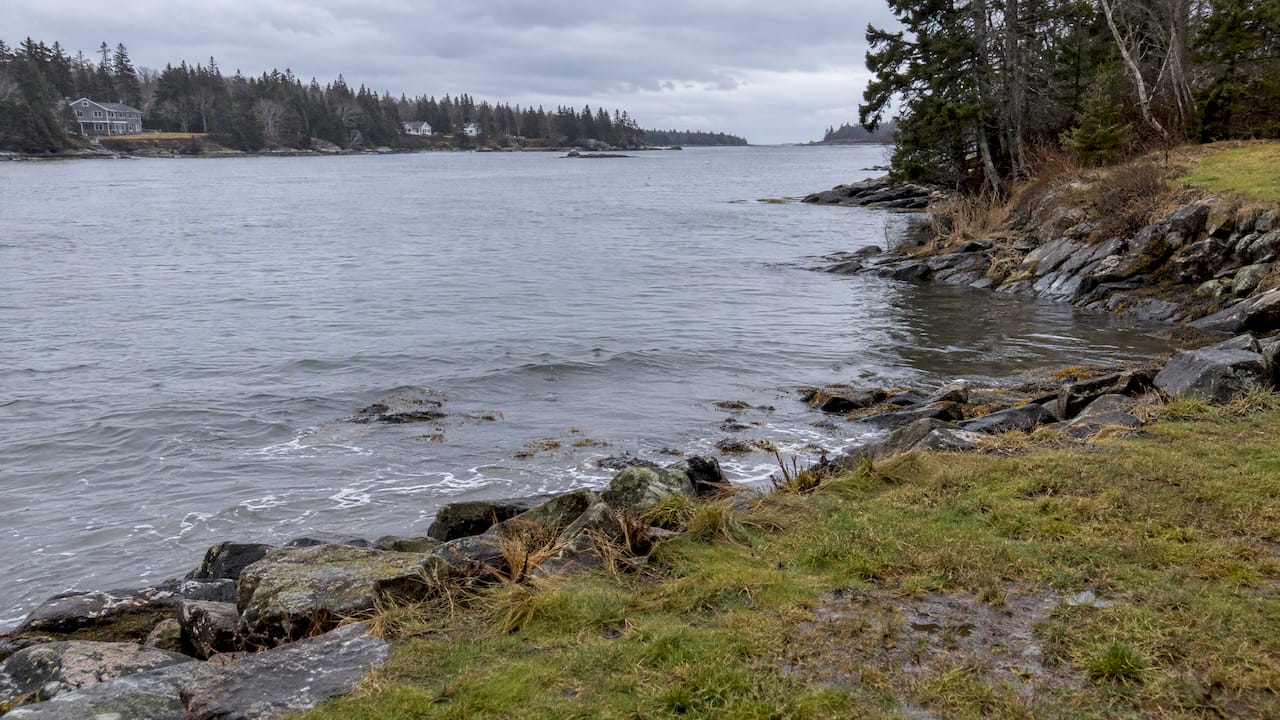
One more tactic: visit in bad weather. A cove that looks calm on a July afternoon can look very different during a nor’easter or at a king tide, and the way water behaves on the lot tells you things a showing never will.
Which Maine coastal region fits you best?
Maine’s coast runs from the New Hampshire line to the Canadian border, and the lifestyle changes mile by mile. Think in regions first, then narrow to towns.
Southern coast (York and Cumberland counties). This stretch suits buyers who want services, healthcare, and an easier commute to Portland or even Boston. Sandy beaches and walkable villages come with higher prices and heavier summer traffic. Exposed oceanfront here can face serious wave action, so flood mapping deserves extra attention.
Midcoast (Sagadahoc, Lincoln, Knox, and Waldo counties). Many buyers who want boating and working-harbor character end up here. Protected coves, tidal rivers, and deep-water moorings are common, and towns like Camden and Boothbay offer restaurants, shops, and year-round communities. Winter life is quieter, so confirm services and road maintenance for the specific street.
Penobscot Bay and the islands. Scenic and often remote, this area rewards buyers who value privacy and a slower pace. Island living adds ferry schedules, limited contractors, and higher costs to build or repair. Ask about emergency access and how supplies reach the property in winter.
Downeast (Hancock and Washington counties). Remote shorefront and lower entry prices attract buyers who want land and quiet. The tradeoff is distance: longer drives to hospitals, fewer vendors, and more of a self-reliant lifestyle.
Match region to priorities:
- Year-round living: southern coast and the larger midcoast towns, where schools, clinics, and plowed roads are dependable.
- Vacation rental potential: popular summer destinations along the southern coast and midcoast, subject to local rental rules you should check town by town.
- Deep-water boating: midcoast and Penobscot Bay, where protected anchorages are easier to find.
- Protected coves versus exposed oceanfront: coves offer calmer water and often lower storm exposure, while open oceanfront delivers drama and higher risk.
County-level numbers differ widely, which is why a statewide figure only goes so far. The Maine Listings September 2026 housing report shows how county medians separate, and the same pattern holds inside each county once you add frontage.
Before you commit to a town, do a town-level check. Call the town office and ask about municipal water and sewer boundaries, winter road clearing on the specific road, emergency response times, and recent permit trends for shoreline work. A road that is private, unpaved, or maintained by an association can change your winter plans completely. We serve central and southern Maine, and we can walk you through these local details for any town on your list.
What do Maine coastal properties cost?
Start with the statewide picture, then adjust upward for frontage. FRED hosts the Maine median listing price series, and its recent reading shows a $450,000 median listing price in September 2026.
The Maine median listing price was $450,000 in September 2026, according to FRED. That statewide number covers every kind of home, so treat it as a floor for waterfront, not a forecast.
Sales prices tell a slightly different story. The Maine Listings September 2026 report puts the statewide median sales price at $415,000 and shows county medians that differ widely. Listing prices and sales prices measure different things, so compare like with like when you build a budget. For more on why one number rarely fits one house, see our post on why a statewide median is only a starting point.
Waterfront land commands a premium for reasons that stack on top of each other:
- Scarcity. Shoreline is finite, and much of it is already built or protected.
- Access. Deep-water frontage, a usable dock, or a private beach each adds value.
- Utilities and site work. Septic design near the water, wells, and sloped lots cost more to build and maintain.
- Insurance. Flood coverage and wind exposure can add real monthly cost, discussed in the next section.
We will not quote a single waterfront premium percentage, because it swings with the town, the frontage type, and the condition of the structures. What we can say is that two homes with the same square footage can sit at very different price points once one has deeded deep-water access and the other looks at the water across a road. Ask your agent for comparables with the same frontage type, not just the same town.
Budget beyond the purchase price. Property taxes, flood and homeowners insurance, closing costs, septic maintenance, dock and bulkhead upkeep, and possible special assessments for private road or association fees all belong in your monthly math. Ask for recent tax bills and insurance quotes before you make an offer, and ask whether the seller has had any claims.
Timing helps your leverage. Summer carries the most inventory, so you have more choice but more competition for the best parcels. Late fall and winter bring fewer buyers, and sellers who held on past peak season are often more flexible. The Maine Listings June 2026 report noted a record June median sales price alongside regional differences in inventory, which shows how strong seasons and weak seasons can coexist inside the same year.
Which coastal risks should you inspect before you buy?
A standard home inspection stops where the coast-specific problems begin. Maine DEP’s guidance for shorefront owners points buyers to the septic system, well water, foundation, roof, heating and electrical systems, retaining walls, and shoreline structures. It also notes that erosion, slope stability, dock rights, and mooring rights may need a specialist or municipal review that a generalist inspector will not provide.
Use this order of operations:
- Check the FEMA flood map. Pull the effective Flood Insurance Rate Map from FEMA’s Flood Map Service Center and find the parcel. FEMA says flood risk extends beyond visible shoreline properties, and that coastal maps use VE, AE, and AO zones. Look for the Limit of Moderate Wave Action, or LiMWA, which marks the inland edge of the Coastal A Zone where waves of 1.5 to 3 feet can occur in a base-flood event.
- Understand what Zone X means. A Zone X designation lowers flood risk but does not eliminate it. FEMA also notes that base flood elevations and insurance costs can change significantly over short distances, so a house next door may carry a very different premium.
- Get insurance estimates early. FEMA explains that premiums reflect distance from water, elevation, wave action, and rebuild cost, and that flood insurance is available even outside mapped high-risk areas. Ask an NFIP agent for a property-specific quote before you waive anything.
- Test and review septic and well. DEP recommends pumping septic tanks every two to three years, so ask for service records and make septic and well testing a contingency.
- Assess erosion and slope. For banks, bluffs, or lots with visible slumping, hire a surveyor, geotechnical engineer, or coastal specialist.
- Inspect the structures at the water. Docks, bulkheads, seawalls, and moorings affect value and liability. Confirm rights and permits through title and municipal review, not just a visual check.
Salt air accelerates corrosion on metal fasteners, mechanical systems, and exterior finishes, so ask your inspector to look hard at those details. If the property relies on a private well near the shoreline, the water may need treatment, and a lab-based approach matters: this guide on matching well water filtration to lab results explains how test results should drive the equipment you choose.
Pro Tip: Order the septic inspection and the flood insurance quote before your offer deadline whenever the seller will allow it, because those two results move price and financing more than anything a standard inspection finds.
Once results arrive, act on them. A bad septic report can justify a repair credit or a price reduction. A high flood premium can be negotiated into the price or become a reason to walk. For a deeper walkthrough of mapping checks, see our post on Maine flood zones and FIRMette checks.
How does shoreland zoning shape what you can build?
Maine’s Mandatory Shoreland Zoning Act requires every municipality to adopt ordinances regulating land near water. Maine DEP describes these rules as applying generally within 250 feet of certain water features, and it names the local code enforcement officer as the usual first contact for questions. The goals are practical: control erosion, protect habitat, and reduce flood damage along the shore.
The key point for buyers is that towns administer the rules, and towns may adopt stricter standards than the state minimum. Two neighboring parcels in different towns can face different setbacks and different permit processes. Evaluate the lot and the municipality together.
Here is what to do before you finalize an offer:
- Request the town’s shoreland zoning map and confirm which zoning district the lot falls in.
- Ask for the permit history on the property, including any past work on docks, seawalls, additions, or septic.
- Speak directly with the code enforcement officer about what you plan to do, whether that is a new deck, a larger kitchen, a replacement dock, or a full rebuild.
- Confirm whether existing structures are legally nonconforming, since that status can limit expansion and affect what you can rebuild after damage.
- Ask how long typical permits take in that town, because timelines vary and may affect your renovation plans.
Certain activities commonly trigger a permit: building or replacing a dock, installing a seawall or other shoreline stabilization, clearing vegetation near the water, and any significant lot disturbance. The practical impact is on your schedule and your budget. A project you imagined finishing before summer can slide by months if it needs review, and costs rise when engineered drawings or specialist reports are required.
For a step-by-step companion to this section, read our shoreland zoning checks for Maine buyers. If your search includes inland water, our lakefront property checklist covers the septic and DEP data points that overlap with coastal parcels.
A step-by-step checklist for buying coastal property in Maine
Turn the checks above into an order you can follow from pre-approval to closing.
- Get lender pre-approval and build a realistic budget. Include projected flood insurance, homeowners coverage, property taxes, and annual maintenance for septic, docks, and exterior finishes. Tell your lender early that the property is on the water.
- Define the frontage type and search with precise filters. Decide between oceanfront, tidal frontage, deep-water access, or deeded access, then set saved searches to match.
- Make an offer that names the inspections. Include septic, well, elevation or survey review, and an erosion assessment where the lot warrants it, along with a title check for access rights, easements, and mooring rights.
- Order specialists immediately. Surveyors, engineers, and septic professionals book up in summer. Use findings to negotiate repairs, credits, or a price change.
- Confirm flood insurance and lender conditions before closing. Do not wait for the final week to learn what coverage costs or whether the lender requires an elevation certificate.
Some contingencies should be non-waivable on the coast: title and access rights, septic and well condition, flood insurance availability and cost, and municipal permitting for any work you consider essential. Waiving them to win a competitive offer can leave you owning a problem that is expensive to fix and hard to resell.
Scheduling matters. When you can, get the septic inspection done before the final offer deadline, and book the surveyor and flood insurance quote early in your contingency period. Compressed timelines are where coastal buyers make mistakes.
On financing, elevation certificates and NFIP premiums can affect lender conditions and closing dates. If the property sits in a mapped high-risk zone, expect the lender to require flood coverage, and expect underwriting to wait on the policy. Start the insurance conversation as soon as you have an accepted offer, or before.
Plan for the full timeline as well. A coastal purchase typically takes longer than an inland one because of the specialist inspections, insurance underwriting, and municipal conversations. Build in extra weeks rather than hoping for the minimum, and set your closing date with the slowest step in mind.
Pro Tip: Ask your REALTOR® to send the seller’s septic records, tax bills, and insurance history early, then place calls to the town code officer and an insurance agent that day.
What 20 years of Maine coastal deals taught me
The most expensive mistakes I see are quiet ones. Buyers assume “Zone X” means no flood risk, skip the septic history because the house looks tidy, underestimate how long a town takes to approve shoreline work, or confuse “deeded access” with a shared right that comes with rules and neighbors.
My triage rule is simple: in your first round of due diligence, confirm title and access, the flood zone, and the septic condition. Those three are deal-breakers and price movers. Everything else, from the roof to the kitchen, is negotiable or fixable. A beautiful view cannot rescue a property that fails one of the three.
A local, shoreland-experienced REALTOR® earns the fee here by speeding up the research. Records, vendors, and town contacts are things you either already have or spend weeks finding. The coast rewards people who know which questions to ask first.
— David
How our REALTOR® services help you buy a Maine coastal home
We work with buyers across central and southern Maine, and coastal purchases are where local knowledge pays off most. We run tailored property searches that sort by frontage type and access rights, check shoreland zoning and flood mapping before you write an offer, coordinate septic, survey, and specialist inspections, and negotiate repairs, credits, and closing terms on your behalf. Our process is transparent and pressure-free, and we answer calls beyond standard business hours so you are never waiting on a deadline.

If you want hands-on help, tell us your target towns and budget, and we will send area comparables and set up a saved search built around the frontage you want. Request a consultation or ask for current listings at Realtormaine, and we will take it from there.
FAQ
Is it cheap to buy a house in Maine?
Not usually on the coast. The statewide median listing price was $450,000 in September 2026, and waterfront parcels typically sit above the statewide figure. Inland and Downeast areas tend to offer lower entry points.
What are the risks of buying coastal real estate?
The main risks are flooding, erosion, septic or well problems, and shoreline structures that need repair or permits. FEMA notes that flood risk extends beyond visible shoreline properties, so check the flood map and get an insurance quote before you commit.
What is the best place to live year-round in Maine?
It depends on your priorities, because prices, services, and winter access vary by county. The southern coast and larger midcoast towns tend to offer the strongest year-round services, while Downeast trades convenience for space and lower prices.
How do I check whether a coastal lot has building restrictions?
Contact the town’s code enforcement officer, who Maine DEP identifies as the usual first contact for shoreland zoning questions. Ask for the shoreland map, permit history, and any limits on expanding or rebuilding existing structures.
Sources
- Floodsmart
- Information for Shorefront Property Owners, Maine Department of Environmental Protection
- Housing Inventory: Median Listing Price in Maine (MEDLISPRIME) | FRED | St. Louis Fed