A lender’s title policy protects the mortgage lender, while an owner’s title policy protects your equity in the home. Lenders almost always require their own policy when you finance a purchase, but the owner’s policy is optional even though we routinely recommend it. Before closing, check both your Loan Estimate and Closing Disclosure to confirm exactly which title premiums you’re paying.
TL;DR:
- When buying a home, most buyers should purchase an owner’s title policy since it protects their equity, legal costs, and preexisting title issues.
- The owner’s policy typically costs less when purchased simultaneously with the lender’s policy, due to discounts offered for bundled coverage.
- The lender’s policy ends once the mortgage is paid off, while the owner’s policy usually lasts as long as the property is owned and covers the full purchase price.
- Payment customs for the owner’s policy vary by region and contract; always verify who is responsible for paying before closing.
- Carefully compare the Loan Estimate and Closing Disclosure title line items to identify any pricing discrepancies or unexpected cost increases.
Table of Contents
- What each policy actually covers
- How title insurance shows up on your closing documents
- What you’ll actually pay, and who typically covers it
- Should you buy an owner’s policy?
- How to verify your title coverage at closing
- How an agent helps you navigate title and disclosures
- Our take: buy the owner’s policy unless you have a clear reason not to
- How we help buyers with title review and closing
- FAQ
- Sources
What each policy actually covers
The lender’s policy covers the outstanding loan balance and defends the lender’s financial interest in the property until the mortgage is paid off. The owner’s policy covers your purchase price, your actual equity, and includes the insurer’s obligation to defend you in court or pay a claim if a covered title defect surfaces after you close.
The two policies differ in more than just who they protect:
- Duration: the lender’s policy ends when the loan is paid off; the owner’s policy typically lasts as long as you or your heirs hold an interest in the property.
- Insured amount: the lender’s policy covers the loan amount, which shrinks over time; the owner’s policy covers the purchase price and generally does not decrease.
- Common exclusions: both policies typically exclude matters of public record you already knew about, zoning restrictions, and problems a current survey would reveal.
- Endorsements: buyers can often add endorsements for specific risks, such as encroachments or unrecorded liens, depending on the property.
How title insurance shows up on your closing documents
Because mortgage lenders require their own coverage in almost every financed purchase, the lender’s premium appears as a standard line item on your paperwork. The CFPB’s TRID disclosure guidance explains exactly how this works:
- The lender’s title insurance premium is disclosed on the Loan Estimate and again on the Closing Disclosure, usually under a line labeled “Lender’s Title Insurance.”
- The owner’s policy, when you choose to buy it, must be labeled “(optional)” directly on the disclosure form so you know it isn’t a lender requirement.
- When you buy both policies from the same title company at the same time, known as simultaneous issue, the lender’s premium is still shown at its full, undiscounted amount on the form, even though your real combined cost is lower.
- Compare the Loan Estimate against the Closing Disclosure line by line and flag any title charge that jumped unexpectedly between the two documents.
Reading these forms side by side is the single best habit for catching a pricing error before you sign anything.
What you’ll actually pay, and who typically covers it
Simultaneous issue pricing is where most of the confusion starts. When you buy the owner’s and lender’s policies together from one title company, the insurer typically charges a reduced rate for the second policy rather than two full premiums. Your total cost is lower than buying each policy separately, even though the Closing Disclosure shows the lender’s premium at full price.

The CFPB’s disclosure formula requires the owner’s premium shown on your form to reflect the simultaneous-issue discount, so the two line items together still equal your real total cost, even when the math on the page looks unusual at first glance.
A few other things worth knowing before you get to the closing table:
- Who pays the owner’s premium, buyer or seller, depends entirely on local custom and your purchase contract; for Michigan buyers, local guidance on title insurance costs and payments can be particularly helpful, as it is not set by any federal rule.
- Payment practices vary by region, so ask your agent what’s typical in your specific market before you assume either side covers it.
- If a line item on your Closing Disclosure looks off, ask the title company to walk you through the math rather than guessing.
Should you buy an owner’s policy?
For most buyers, yes. An owner’s policy protects the equity you’re putting into the home, covers your legal defense costs if someone challenges your ownership, and resolves claims tied to defects that existed before you even closed, things a title search can miss entirely.
- Protects your purchase price, not just the shrinking loan balance the lender’s policy covers.
- Pays legal defense costs if a dispute over your ownership ends up in court.
- Covers preexisting title problems, including forged documents or undisclosed heirs, that surface only after closing.
Enhanced owner’s policies add extra endorsements, such as coverage for zoning violations or post-closing boundary disputes, and according to the NAIC consumer guide, these enhanced versions generally cost more than standard policies. They tend to matter most for older homes with a long chain of title, properties with a complicated ownership history, and cash buyers who have no lender policy acting as a backstop at all.
Pro Tip: Buying your owner’s policy at the same time as the lender’s policy almost always costs less than purchasing it separately later.
How to verify your title coverage at closing
Confirming your title insurance takes a few minutes if you know exactly where to look.
- Compare every line labeled “Title -” on your Loan Estimate against the same line on your Closing Disclosure.
- Confirm the owner’s policy, if you’re buying one, is marked “(optional)” and matches the amount you agreed to.
- Ask who is listed as the named insured on each policy and which endorsements apply to your file.
- Confirm with the title company whether a simultaneous rate was applied to your combined premium.
- After closing, keep your owner’s policy and recorded deed somewhere safe, and confirm the deed was recorded with your county registry.
- If a title problem surfaces later, contact your title insurer right away, preserve every closing document, and consult an attorney if the claim is disputed.
| Step | What to check | Why it matters |
|---|---|---|
| Review disclosures | Loan Estimate vs Closing Disclosure title lines | Catches pricing errors before signing |
| Confirm optional labeling | Owner’s policy marked “(optional)” | Confirms it wasn’t mistakenly required |
| Verify recording | Deed recorded with county | Protects your legal ownership claim |
How an agent helps you navigate title and disclosures
Part of representing a buyer well is reviewing the title commitment before closing, flagging anything unusual, and explaining in plain terms why an owner’s policy is worth the cost for that particular property. Payment customs for the owner’s premium can vary by location and transaction, so we walk clients through what’s typical locally before they negotiate it into a purchase contract.
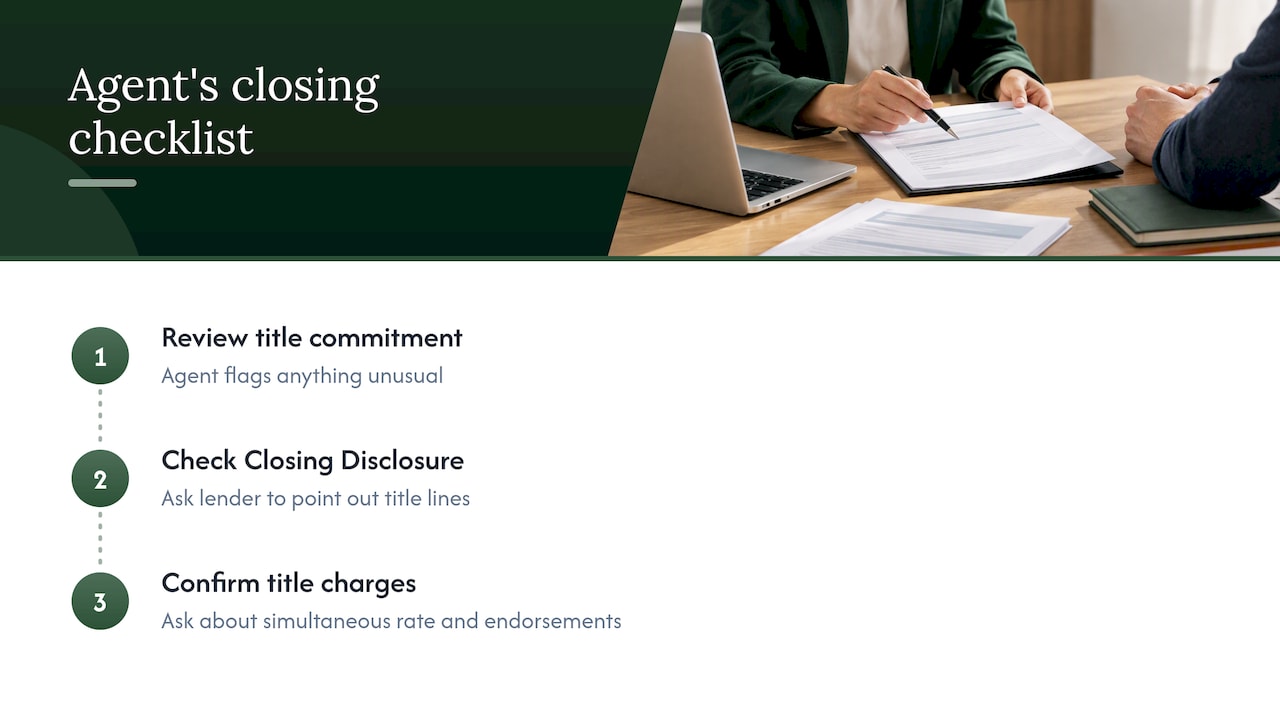
A simple closing checklist helps here: ask your lender to point out the title lines on your Closing Disclosure, ask the title company whether a simultaneous rate applies, and ask whether any endorsements were added. With 20 years representing buyers and sellers across Maine’s residential market, we’ve found that asking those three questions early resolves most confusion before it ever reaches the closing table.
Our take: buy the owner’s policy unless you have a clear reason not to
Our default recommendation for most buyers is simple: purchase the owner’s policy. The small premium protects a much larger stake, your home equity, unless a thorough title search turns up facts that make a covered defect genuinely unlikely. Double-check your Loan Estimate and Closing Disclosure line by line, and store the finished policy somewhere safe. When you’re unsure, ask your agent or a title attorney; a modest cost now can prevent a painful loss later.
— David
How we help buyers with title review and closing
We review your title commitment before closing, explain in plain language what an owner’s policy would and wouldn’t cover for your specific property, and walk through your Closing Disclosure line by line so nothing catches you off guard.

Working with a buyer’s agent who already understands central and southern Maine’s closing customs means:
- We flag unusual title exceptions or liens before they become a last-minute surprise.
- We explain whether an owner’s policy makes sense for your particular purchase.
- We attend your closing and help you confirm every title line matches what you agreed to.
If you’re buying a home in Maine and want a second set of eyes on your title and closing paperwork, reach out through our buyer services page to get started.
FAQ
Do you need both lender’s and owner’s title insurance?
You need the lender’s policy whenever you finance your purchase with a mortgage, since lenders require it to protect their loan. The owner’s policy is optional, but we recommend it because it’s the only coverage that protects your own equity and legal defense costs.
Who usually pays for the owner’s title policy?
Payment customs vary significantly by region and are set by local practice and the purchase contract rather than by any federal rule, according to the NAIC consumer guide. In some markets sellers typically cover it, while in others buyers do, so ask your agent what’s standard where you’re buying.
Why would a buyer want an owner’s title policy?
An owner’s policy protects your purchase price and pays your legal defense costs if someone challenges your ownership after closing. It also covers preexisting problems, like forged documents or unknown heirs, that a title search might miss entirely.
Is it worth it to get owner’s title insurance?
For most buyers, yes, since the policy protects a large financial stake, your home equity, for a comparatively small one-time premium. It’s especially valuable for older homes, properties with complex ownership histories, and cash buyers who have no lender policy as a backstop.
What’s the difference between the two policies’ coverage amounts?
The lender’s policy covers the loan balance, which shrinks as you pay down your mortgage, while the owner’s policy covers your full purchase price and generally doesn’t decrease. The lender’s coverage ends at payoff, but the owner’s policy typically lasts as long as you hold an interest in the home, per the NAIC guide.