
Maine law requires you to complete a written property disclosure statement and deliver it no later than when a buyer makes an offer, unless your transaction qualifies for an exemption. If you deliver it after an offer is made, the buyer gets 72 hours to cancel without penalty. The form covers your water supply, heating system, septic system, hazardous materials, known defects, flood hazard, and shoreland-zoning issues, and if your home was built before 1978, federal lead-paint disclosure rules apply on top of the state form.
TL;DR:
- Maine law mandates full disclosure of water supply, hazard history, and known defects before the buyer makes an offer to avoid cancellation rights.
- Delivery must occur at or before the offer; late disclosure allows buyers to cancel within 72 hours without penalty, but this right is lost after occupancy or closing.
- Exemptions from disclosure exist for certain transfers like gifts, corrective deeds, or court-ordered sales, but sellers should verify exemption status in writing.
- For properties built before 1978, federal lead-paint disclosure is required alongside Maine’s form, including providing the EPA pamphlet and offering a 10-day inspection window.
- Accurate record collection and timely completion are critical, as disclosures must be updated if new information emerges before settlement.
Table of Contents
- What Maine law requires you to disclose (Title 33, §173)
- When you must deliver the disclosure and what happens if you’re late (Title 33, §174)
- Do you have to disclose? Checking exemptions under §172
- Federal lead-paint rules still apply on top of the Maine form
- A practical checklist for completing your disclosure form
- What happens after you deliver: supplements, accuracy, and the “not a warranty” rule
- Why candor and documentation protect you more than silence ever will
- How we help you get your disclosure right the first time
- FAQ
- Sources
What Maine law requires you to disclose (Title 33, §173)
Maine’s disclosure statute lays out specific categories you must address on the form, and vague answers invite disputes later. Title 33, §173 requires detailed subitems for several categories, not just a yes or no checkbox.
- Water supply: source (private well, public, shared), any known water quality issues, and test results if you have them.
- Heating system: type, age, fuel source, service history, and typical fuel consumption.
- Insulation: type and location where known.
- Waste disposal: septic system age, tank size, pumping history, and any known failures.
- Hazardous materials: asbestos, lead paint, radon, underground fuel tanks, and any history of methamphetamine contamination.
- Known defects: any condition you know about that significantly affects value, health, safety, or the structure’s expected life.
- Access: whether the property has legal access to a public way.
- Flood hazard: whether the property sits wholly or partly in a FEMA-mapped special flood hazard area, with the relevant map panel attached, plus any flood events, damage, insurance claims, or disaster aid received during your ownership.
- Shoreland zoning: notices of violation, pending enforcement, litigation, judgments, settlements, or consent agreements tied to shoreland zoning rules.
Most sellers misunderstand three items. Shoreland-zoning enforcement is a newer addition and easy to miss if you have never dealt with code enforcement. Flood history asks about claims and aid received, not just whether you currently carry flood insurance. And “known defect” has a specific legal meaning, a condition you actually know about that meaningfully affects value, safety, or longevity, not a guess about what might be wrong. For heating and septic answers, cite the actual service invoice or inspection report rather than your memory of when something was last serviced.
When you must deliver the disclosure and what happens if you’re late (Title 33, §174)
Timing drives most disclosure disputes, and the rule is specific. Title 33, §174 requires delivery no later than when a purchaser makes an offer on your property.
- Deliver the completed disclosure statement to the buyer before or at the moment they submit an offer.
- If you deliver it after the offer, the buyer has 72 hours from receipt to terminate or withdraw the offer without penalty and get any deposit back promptly.
- That cancellation right disappears for good once the buyer closes or takes occupancy without exercising it.
“Without penalty” means the buyer walks away cleanly within that 72-hour window, separate from whatever other remedies the purchase contract might otherwise allow.
Pro Tip: Complete your disclosure form before you list the property, not after an offer lands. It removes the 72-hour cancellation risk entirely and keeps your timeline in your own hands.
Do you have to disclose? Checking exemptions under §172
Not every transfer triggers the disclosure duty. The statute applies to sales, exchanges, installment land contracts, and leases with an option to purchase, generally for properties of four units or fewer, and the “seller” is whoever is transferring that interest.
- Corrective deeds that fix a prior defective transfer are typically exempt.
- Transfers without consideration, such as a gift between family members, usually fall outside the requirement.
- Certain transfers tied to estates, foreclosures, or court orders may also be excluded.
If your situation sits anywhere near these edges, have your agent or a real estate attorney confirm exemption status in writing before you skip the form. Keep documentation of why an exemption applies in your closing file.
Federal lead-paint rules still apply on top of the Maine form
For any home built before 1978, federal law layers an additional disclosure duty on top of your state obligations. The federal lead-based paint disclosure rule requires you to disclose known lead-based paint or lead hazards, provide the EPA’s lead hazard pamphlet, include a Lead Warning Statement in the contract, and give buyers a 10-day window to conduct a lead inspection or risk assessment before they’re bound to the contract.
- Provide these federal materials before the purchase contract is signed, even if your Maine disclosure form is already complete.
- The federal pamphlet and warning statement are separate documents from the state property disclosure form, not an alternate version of it.
- If you deliver documents electronically, confirm your process meets E-SIGN Act requirements for consent and recordkeeping.
The federal rule applies specifically to housing built before 1978, which EPA guidance identifies as the construction cutoff tied to the national ban on residential lead paint.
A practical checklist for completing your disclosure form
Treat the form as a documentation project, not a quiz. Gather your records first, then fill in the fields.
- Pull water test results, septic pumping receipts, heating service invoices, and chimney inspection reports before you start.
- Collect any flood insurance claims paperwork, FEMA map panel information, and disaster aid records if they apply to your property.
- Check for shoreland zoning correspondence, including any notices or enforcement letters, even old ones.
- Write “unknown” or “N/A” on any field you genuinely cannot answer rather than leaving it blank or guessing.
- Attach supporting documents directly to the disclosure where the form allows it.
- Keep dated copies of everything you submit, for your own file and for your agent’s transaction records.
Guessing is worse than writing “unknown.” An honest “unknown” reflects the limits of your knowledge, while a guess that turns out wrong can look like concealment later. Order a pre-listing inspection if you suspect an issue you can’t otherwise document, and loop in an attorney early for anything involving shoreland enforcement, suspected contamination, or flood claims with insurance complications. The seller who waits until an offer is on the table to start pulling records is the one who ends up missing the delivery deadline and handing the buyer a clean 72-hour exit.
What happens after you deliver: supplements, accuracy, and the “not a warranty” rule
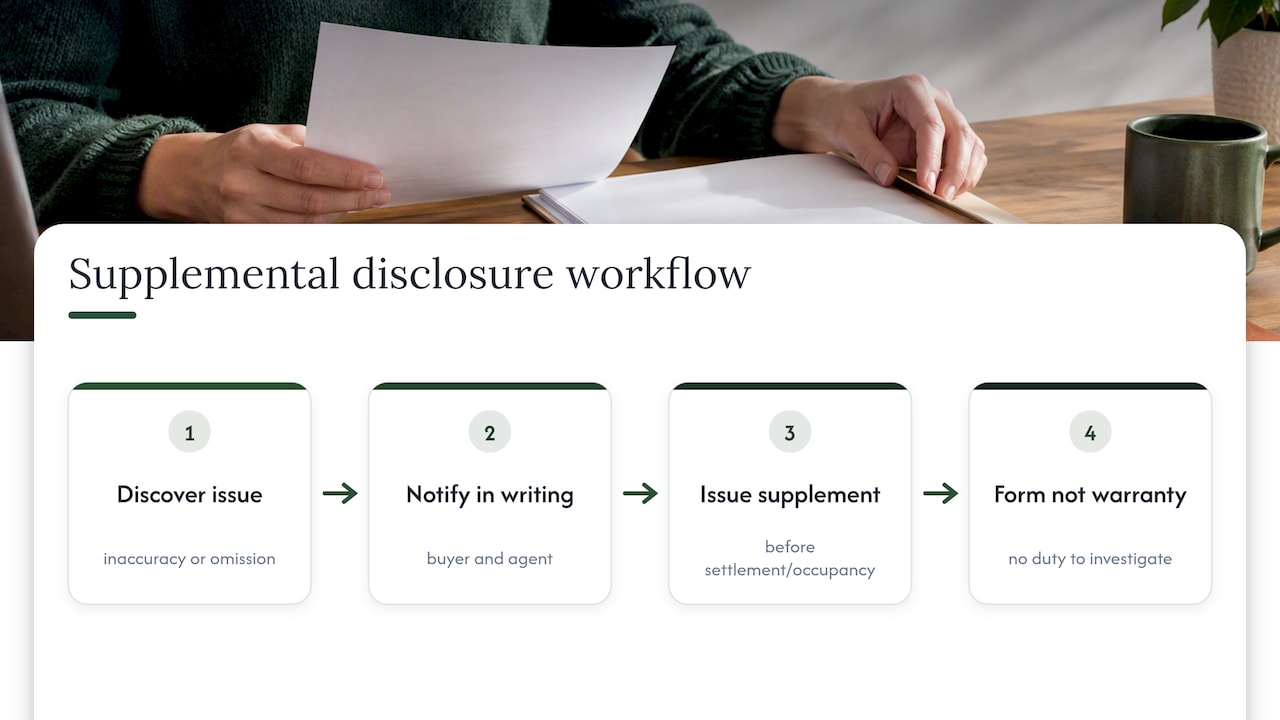
Your disclosure obligations don’t end at delivery. If you learn of an inaccuracy or omission before settlement or occupancy, Title 33, §176 requires you to provide a supplemental disclosure correcting it.
The form itself is not a warranty, and you’re not required to investigate conditions you don’t already know about. You simply can’t knowingly conceal something you do know. If an inaccuracy surfaces, notify the buyer and your agent in writing immediately and issue the supplemental disclosure rather than waiting to see if it comes up at closing.
Why candor and documentation protect you more than silence ever will
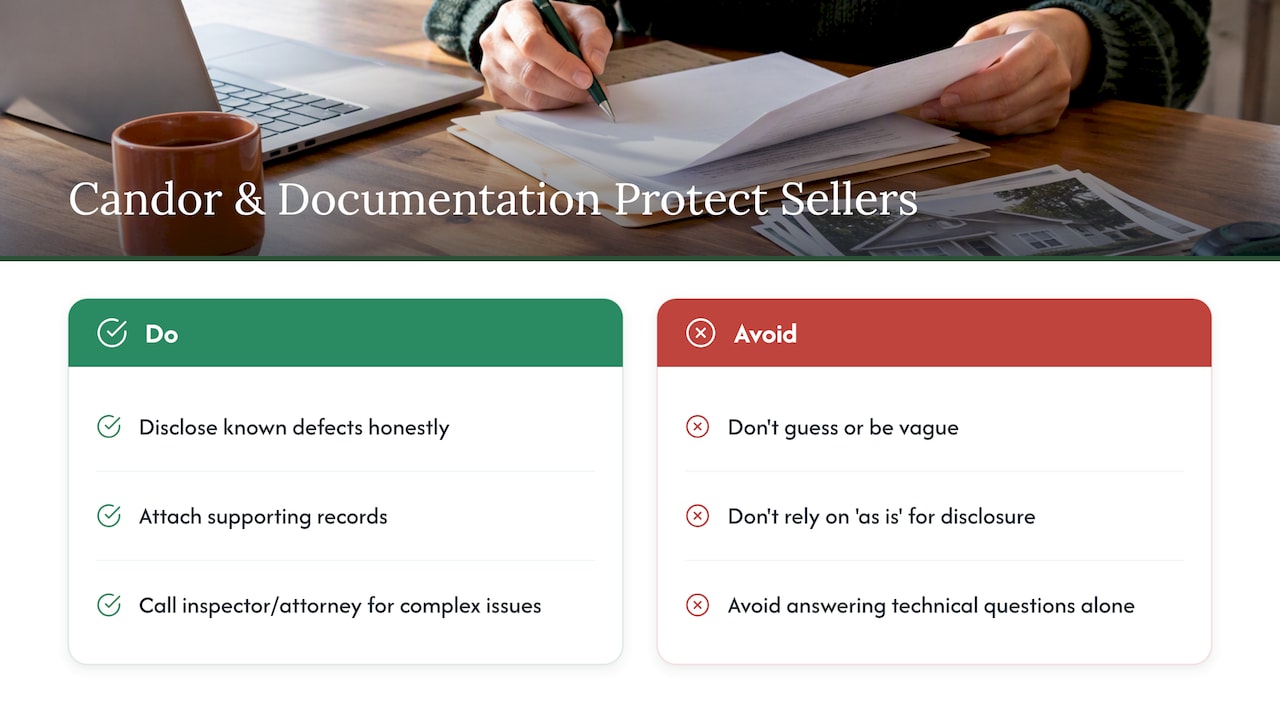
Sellers who answer the form honestly and attach supporting records close with far fewer disputes than sellers who guess or stay vague. “As is” language in a purchase agreement covers repairs, not your duty to disclose a known defect, those are separate negotiations entirely.
When a question touches shoreland enforcement, possible contamination, or a complicated flood claim history, that’s the moment to bring in an inspector or attorney rather than answer it yourself. The pattern is consistent: the sellers who document everything upfront are the ones who never hear from their buyer’s attorney again.
— David
How we help you get your disclosure right the first time
Completing a disclosure form accurately while juggling a sale is a lot to manage alone, and we handle that work alongside you. Through our Selling My Home service, we help you gather the records your form requires, flag which statutory items apply to your property, and time delivery so you’re never caught fielding an offer before the paperwork is ready.

- We review your water, septic, heating, and flood records against each statutory category before you submit anything.
- We coordinate any inspections you need, from well tests to lead assessments on pre-1978 homes.
- We build your delivery timeline so your disclosure goes out before offers arrive, not after.
A first conversation with us typically covers a document checklist, a review of what you already have on hand, and a realistic timeline for getting your listing disclosure-ready. Reach out through Realtormaine to get started.
This article is general information, not a substitute for advice from a qualified lawyer. Consult a qualified legal professional about your own circumstances before acting on anything here.
FAQ
What are the disclosure requirements for real estate transactions in Maine?
Maine requires sellers of residential property with four units or fewer to complete a written disclosure statement covering water supply, heating, septic systems, hazardous materials, known defects, flood hazard, and shoreland zoning issues under Title 33, §173. Certain transfers, such as corrective deeds or gifts without consideration, are exempt under related provisions of the statute.
When should an agent get the seller’s disclosure from the seller?
An agent should get the completed disclosure from you before listing the property or, at the latest, before any buyer submits an offer. Title 33, §174 requires delivery no later than the time of offer, and late delivery gives the buyer 72 hours to cancel without penalty.
What are the new laws in Maine for 2026?
Recent updates to Maine’s disclosure statute added requirements around flood hazard history and shoreland-zoning enforcement matters, including FEMA map panel disclosure and reporting of zoning violations or litigation. These additions appear directly in Title 33, §173 and apply to sellers completing the form going forward.
Are disclosure requirements the same in all states?
No, disclosure requirements vary significantly by state in both scope and timing, so a form or rule that applies in another state may not match Maine’s statute. Maine sellers should rely specifically on Title 33, §§171 through 176 rather than general disclosure guidance written for other markets.