Brunswick is a culturally rich college town with coastal access, strong schools, and a walkable downtown built around Bowdoin College. The main trade-off is housing costs that sit above the state average and a market that moves fast for anyone who hesitates. It suits families chasing good schools, academics and professionals tied to Bowdoin or Brunswick Landing, and retirees who want midcoast scenery without total isolation.
TL;DR:
- Homes near downtown Brunswick sell quickly and are priced above the Maine average, especially those that are move-in ready or historically significant.
- The market favors sellers, with inventory tightest for homes under $450,000, and buyers should get pre-approved and make clean offers to compete effectively.
- Brunswick’s neighborhoods vary from walkable Maine Street with high costs to Brunswick Landing for professionals and remote workers needing short commutes.
- Winters are snowy and cold, requiring winter preparation such as checking heating systems, snow tires, and having a snow removal plan.
- Housing costs are higher than the state average mainly due to demand from Bowdoin students, faculty, and out-of-state relocators, making local market knowledge crucial.
Table of Contents
- Living in Brunswick, Maine: The Numbers That Matter
- Brunswick, Maine Neighborhoods: Which One Fits You
- Brunswick Maine Housing Market: What Buyers Should Know
- Schools in Brunswick, Maine and Family Life
- Getting Around Brunswick, Maine
- Winters in Brunswick, Maine: What to Actually Expect
- What It’s Like to Live in Brunswick, Maine
- Your Brunswick Relocation Checklist
- A Local Realtor’s Take on Buying in Brunswick
- How RealtorMaine Can Help You Move to Brunswick
- Sources
- FAQ
Living in Brunswick, Maine: The Numbers That Matter
Brunswick’s population is small enough to know your neighbors and large enough to support real restaurants, a hospital, and a college. Median home prices sit noticeably above the Maine state average, a direct result of demand from Bowdoin-affiliated buyers, retirees, and remote workers who priced out of Portland. Rents track that same pressure, especially near downtown and Brunswick Landing.
A few quick reference points:
- Population: a small town size supporting local amenities
- Housing costs: above the Maine state average with tight inventory in walkable neighborhoods
- Transportation: Amtrak Downeaster service connects Brunswick to Portland and Boston
- Anchor institution: Bowdoin College, a major employer and cultural hub
- Climate: cold, snowy winters with average snowfall well above the national norm and summers that rarely feel oppressive
Pro Tip: If you’re weighing Brunswick against a cheaper inland Maine town, factor in what you’re not paying for: a hospital, a liberal arts college, and rail access to two major cities. That changes the math.
Brunswick, Maine Neighborhoods: Which One Fits You
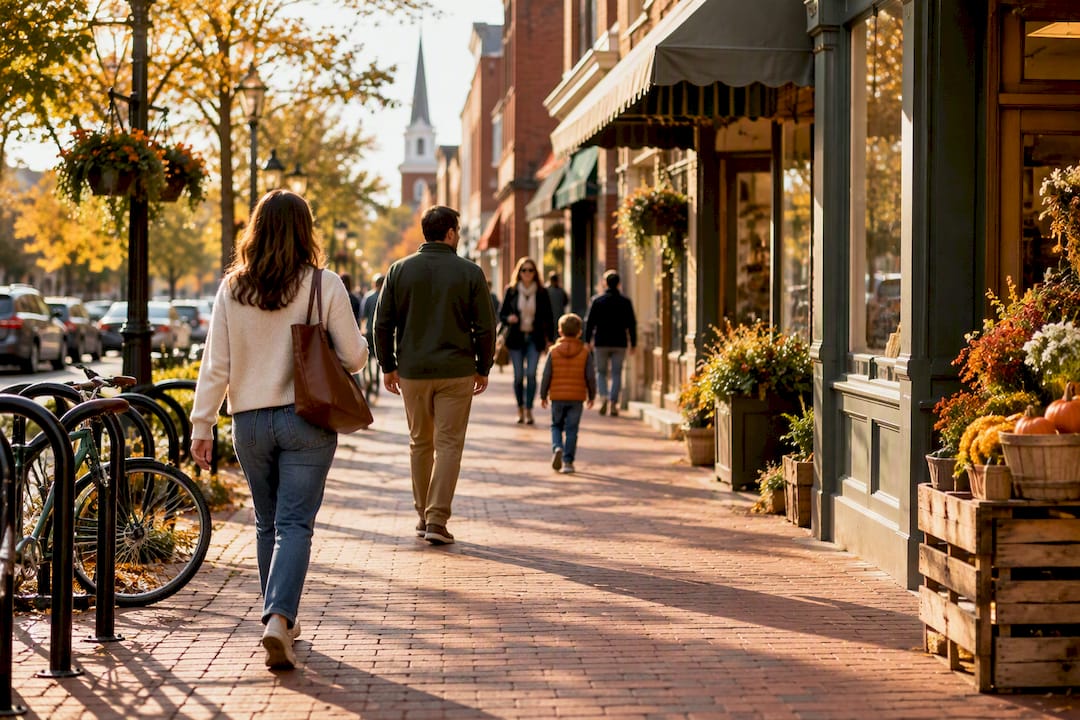
Downtown Brunswick centers on Maine Street, where you can walk to dinner, a bookstore, and a farmers market without touching your car. It suits people who want a main-street life and don’t mind paying a premium for that convenience.
Brunswick Landing, built on the former naval air station, has become the town’s newest housing and employment hub. Redevelopment there has diversified the local economy toward aviation, technology, and business tenants, which makes it a strong fit for professionals who want a short commute to work.
Suburban pockets outside the downtown core offer bigger yards, more parking, and better odds of finding a single-family home under the town median, at the cost of a longer walk to anything.
- Downtown/Maine Street: walkable, restaurant-dense, best for those prioritizing lifestyle over square footage
- Brunswick Landing: newer construction, job proximity, appeals to professionals and remote workers
- Suburban Brunswick: yards and parking, longer commute to downtown amenities
When touring homes, check school attendance boundaries before you fall in love with a listing, and drive the route at rush hour. Traffic near the college and along Route 1 can surprise buyers used to smaller towns.
Brunswick Maine Housing Market: What Buyers Should Know
Home prices in Brunswick have trended upward for several years, and the market currently favors sellers, particularly for updated single-family homes near downtown or the water. Older, character-filled homes in the historic district move differently than newer units at Brunswick Landing, and that gap catches out-of-area buyers off guard. Inventory is tightest for move-in-ready homes under $450,000; larger properties and land parcels sit on the market longer.
Here’s how to compete without overpaying:
- Get pre-approved before you tour, not after you find a house you like. Sellers in this market often won’t take an offer seriously without it.
- Work with an agent who knows the town’s micro-markets, since pricing between historic in-town homes and newer construction varies more than out-of-town buyers expect.
- Prepare a clean offer with minimal contingencies where your financing allows, and know your walk-away number before you write it.
- Watch for financing angles, including FHA versus conventional loan structures, that can strengthen a lower-down-payment offer.
Local government has responded to affordability pressure with an Affordable Housing Support Fund, aimed at expanding the supply of housing residents at various income levels can actually afford.
Pro Tip: Ask your agent for the days-on-market average for the specific neighborhood, not the town-wide figure. A home in Brunswick Landing and a home three blocks off Maine Street can have wildly different timelines.
Schools in Brunswick, Maine and Family Life
Brunswick’s public schools draw families from across the region, and performance data on sites like GreatSchools helps parents compare specific buildings before committing to a neighborhood. Bowdoin College adds resources most towns this size don’t have: museums, lecture series, and youth programs that spill over into public life.
Families relocating for schools consistently name education and Bowdoin’s cultural reach as the deciding factor, with cost as the main friction point. Before you move, families should verify:
- Which elementary school a specific address feeds into (boundaries shift and matter)
- Availability at local childcare providers, which often carry waitlists
- Youth sports, library programs, and Bowdoin-affiliated community offerings
Getting Around Brunswick, Maine
The Amtrak Downeaster stops in Brunswick and runs to Portland in roughly 30 minutes and on to Boston in around three hours, a real option for commuters or anyone tired of I-295 traffic. Downtown itself is walkable, but that convenience doesn’t extend far. Groceries, errands, and most regional travel still require a car, even for people who live within walking distance of Maine Street.
- Amtrak Downeaster: regular service to Portland and Boston
- I-295 access: connects Brunswick to Portland in under 30 minutes by car
- Local transit: limited; plan on car ownership for daily life outside downtown
- Typical commute: shorter than most southern Maine suburbs, longer if you work in Portland proper
Winters in Brunswick, Maine: What to Actually Expect
Winter here means real snow, regular below-freezing stretches, and a plow schedule that becomes part of your weekly rhythm. It’s colder and snowier than coastal towns further south, and newcomers from milder climates underestimate how much it reshapes daily routines, from school delays to grocery runs.
Get ready before your first November:
- Check your furnace and insulation before the first hard freeze; older homes in the historic district often need updates buyers don’t budget for.
- Line up a plow or snow removal plan for your driveway, since town crews prioritize streets, not private lots.
- Switch to snow tires by late November and keep a basic emergency kit in the car through March.
Pro Tip: Ask the seller for last winter’s heating oil or electric bills during your home inspection. It’s the fastest way to gauge whether a house is actually as efficient as the listing claims.
What It’s Like to Live in Brunswick, Maine
Bowdoin College anchors much of the town’s cultural calendar, with museums, festivals, and lectures open to the public alongside performances at the Maine State Music Theatre. Maine Street carries the daily rhythm, lined with independent restaurants, bookshops, and coffee shops that give downtown its main-street feel rather than a chain-store sameness.
Weekends pull residents toward the water. Harpswell and Casco Bay sit close enough for a half-day trip, and regional groups host conservation and community events throughout the year that plug newcomers into local life fast.
- Bowdoin-linked museums, festivals, and public lectures
- Independent dining and shops along Maine Street
- Easy weekend access to Harpswell and Casco Bay for boating, hiking, or just the view
Your Brunswick Relocation Checklist
Start planning 60 to 90 days before your move if you can. That gives you time to line up financing, tour neighborhoods in different seasons if possible, and avoid a rushed decision in a market that doesn’t wait around.
- Budget beyond the purchase price: moving costs, security deposits, heating fuel setup, and a home inspection.
- Enroll kids in school early, since some programs and boundary-specific slots fill before summer.
- Register your vehicle with the Maine BMV and update your address with utility providers before closing.
- Set up utilities and internet at least two weeks ahead so you’re not without heat in your first Maine winter.
A Local Realtor’s Take on Buying in Brunswick
Brunswick’s market punishes buyers who treat it like one homogenous town. Historic homes near downtown price differently than new construction at Brunswick Landing, and an agent who doesn’t know that gap will cost you money on either end. Timing matters too: listings tend to loosen up slightly in late fall and winter, when fewer buyers are touring, and tighten hard every spring. The biggest mistake newcomers make is falling in love with a listing photo before checking the school boundary or the winter heating costs.
— David
How RealtorMaine Can Help You Move to Brunswick
RealtorMaine gives you the kind of micro-market read that generic listing sites can’t: knowing which Brunswick block is overpriced, which Brunswick Landing unit is a real deal, and when to push back on a seller’s number. David Haydym brings experience in Maine real estate to buying, selling, investment property, and vacation or seasonal home purchases, with pricing informed by local data and responsive communication.

Whether you’re buying your first home near Maine Street or listing a property before your own move, the process starts with a conversation, not a contract. Schedule a consultation with RealtorMaine to talk through your budget, timeline, and the neighborhoods that fit your family before you make an offer.
Sources
FAQ
Is Brunswick, Maine a good place to live?
Yes, for buyers who value schools, culture, and coastal access enough to accept above-average housing costs. It fits families, academics, and professionals tied to Bowdoin College or Brunswick Landing better than it fits anyone chasing the cheapest possible cost of living.
What are winters like in Brunswick, Maine?
Winters bring regular snow, sustained below-freezing stretches, and a real need for snow tires and a home heating check before the season starts. Plow crews prioritize main roads, so private driveways and parking lots need their own plan.
What is the nicest place to live in Maine?
There’s no single answer, since it depends on whether you want city amenities, coastal isolation, or a college-town balance of both. Brunswick consistently ranks among the top picks for buyers who want walkability, good schools, and easy access to Portland without paying Portland prices.
What are the housing costs like compared to the rest of Maine?
Brunswick’s home prices run above the state average, driven by demand from Bowdoin-affiliated buyers and people relocating from more expensive markets. Working with an agent who understands the town’s historic-versus-new-construction price gap, like RealtorMaine, helps buyers avoid overpaying in a competitive market.