
For long-term rentals, Bangor and Lewiston lead Maine on gross yield, Westbrook and Auburn score well on broader screens, and Portland offers the deepest tenant pool at the highest price. For short-term rentals, the money sits on the coast: Bar Harbor, Mount Desert, Ellsworth and Bath. Which one fits depends on your budget, how hands-on you want to be, and whether you want income or appreciation.
Below is how the markets compare, with the figures and their sources, plus the costs and rules that decide whether a yield on paper becomes cash in your account.
TL;DR
- Bangor has the strongest gross yield among Maine cities with enough data, at 6.7% on a $289,000 median price and $1,625 median asking rent. Lewiston follows at 6.4%.
- Portland is the busiest and most expensive market. Its gross yield runs near 5%, but demand is steady and rents are the highest in the state.
- Coastal short-term markets earn more per unit but swing hard with the seasons and face tightening local rules.
- Gross yield ignores vacancy, taxes, insurance, repairs and financing. At today’s mortgage rates, many Maine deals need a value-add plan to cash flow.
Table of Contents
- How to read a “best rental market” ranking
- Maine’s best long-term rental markets compared
- Short-term and vacation rental markets
- What eats the yield: costs and risks
- The market timing picture
- Which market fits which buyer
- Our perspective
- Work with a Maine Realtor on your rental search
- FAQ
- Sources
How to read a “best rental market” ranking
Every ranking in this article uses gross yield: annual rent divided by purchase price. It is a screen for finding markets, not a way to underwrite a deal. One data provider cautions that gross yield excludes vacancy, maintenance, taxes, insurance and financing. Another says its screen is for finding markets, not underwriting individual deals.
The sources also disagree a little, because they use different samples and time windows. Bangor shows 6.7% in one analysis and 6.3% or 6.5% in others. Treat each figure as a range and check it against the actual listing and the actual rent comps for the street you are buying on. For net returns, our guide to cap rate in Maine and how to calculate it walks through the math.
Maine’s best long-term rental markets compared
| Market | Typical price | Typical rent | Gross yield | Source |
|---|---|---|---|---|
| Bangor | $289,000 | $1,625 | 6.7% | ResiLine, July 2026 |
| Lewiston | $320,650 | $1,700 | 6.4% | ResiLine, July 2026 |
| Portland | $589,500 | $2,548 | 5.2% | ResiLine, July 2026 |
| Augusta | $325,000 | $1,481 | 5.5% | RentMarker, 2026 |
These are asking rents and closed prices from different providers, so compare rows loosely. The point is the pattern: price drops faster than rent as you move away from Portland, which lifts the yield.
Bangor: the yield leader
Bangor is the top performer on gross yield in almost every 2026 screen. A second source lists it at a 6.3% gross yield with typical home values near $288,000, and an aggregator reports a 4.6% cap rate, the highest in its Maine set. The 2026 two-bedroom Fair Market Rent for the Bangor area is $1,722. That is a useful ceiling check for subsidized-voucher tenants.
The tradeoff is scale. Bangor is a regional hub, not a high-growth metro, so you are buying stable, modest rent growth and a lower entry price. It suits first-time investors who want a house or small multifamily without a Portland-sized check.
Lewiston and Auburn: affordable and active
Lewiston’s 6.4% yield comes with a caveat. About 85% of its rental sample is apartments and condos while sales are mostly houses, so the figure understates what a house would rent for. A single-family buyer may do better than the headline suggests, but verify with comps. Auburn scores 54 out of 100 on one broader screen, with a 6.1% gross yield. Lewiston-Auburn’s two-bedroom Fair Market Rent is $1,677.
Westbrook, Sanford, Waterville and Augusta: the second tier
One 2026 screen ranks Westbrook first among its Maine cities at 63 out of 100, with a 6.3% gross yield, followed by Auburn at 54, Waterville at 53, South Portland at 53, Sanford at 51, and Augusta and Lewiston at 48. Waterville shows the highest gross yield in that set, at 6.5%. Westbrook’s appeal is simple: Portland jobs and tenants within a short commute, at a price well under Portland’s. These are good places to look if Bangor feels too far from where you live.
Portland and South Portland: demand over yield
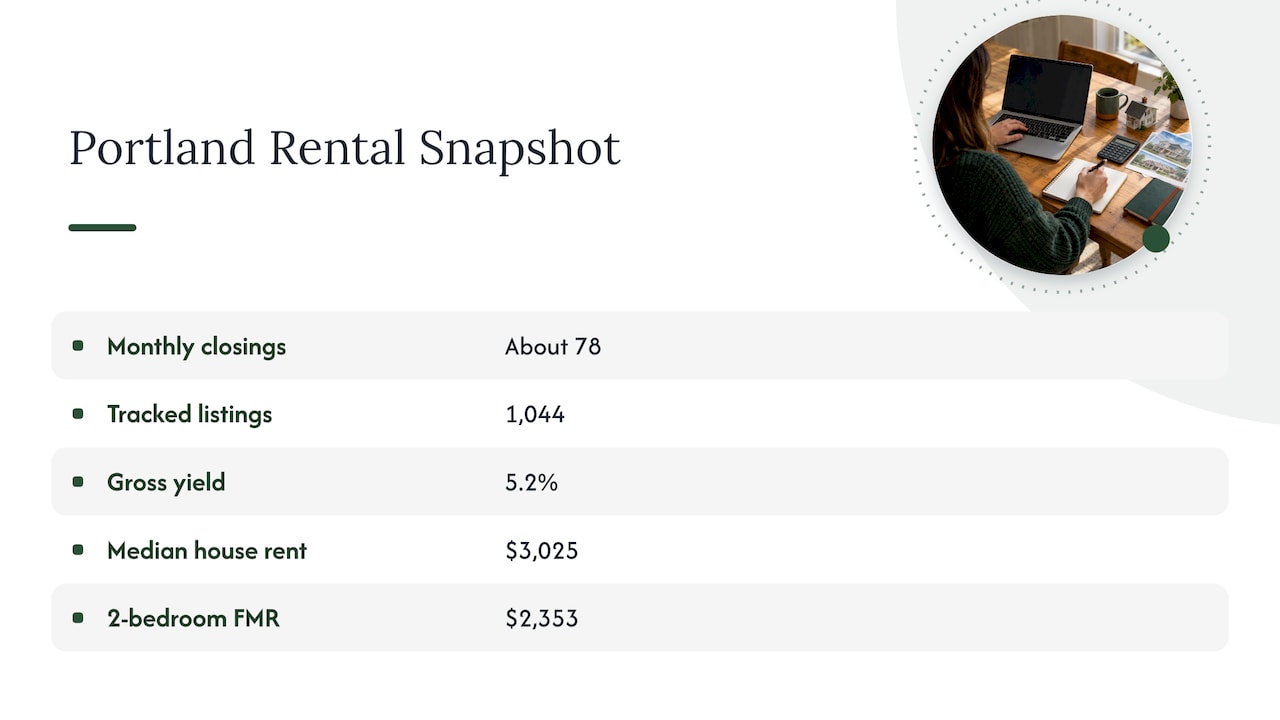
Portland is Maine’s busiest rental market, with about 78 closings a month and 1,044 tracked rental listings. It yields 5.2% gross, and houses rent for a median of $3,025 against the lower apartment figure. The two-bedroom Fair Market Rent is $2,353 for the Portland area. On a metro basis, one leaderboard puts Portland-South Portland at 5.79%, the highest in its Maine ranking.
The demand case is real. Maine’s state economist reports population growth of 3.1% from 2020 to 2024, driven by migration, and describes Cumberland County as among the state’s lowest-unemployment areas. For a closer look at prices, see our Portland housing market breakdown.
Saco, Biddeford, Bath and Brunswick
Saco and Biddeford screen at 4.6% gross yield each on values above $520,000, so they are appreciation plays more than cash-flow plays. Bath sits at 5.9%. York County’s two-bedroom Fair Market Rent is the state’s highest at $2,376 for York-Kittery-South Berwick, and Sagadahoc County, which includes Bath, is $1,659.
Short-term and vacation rental markets
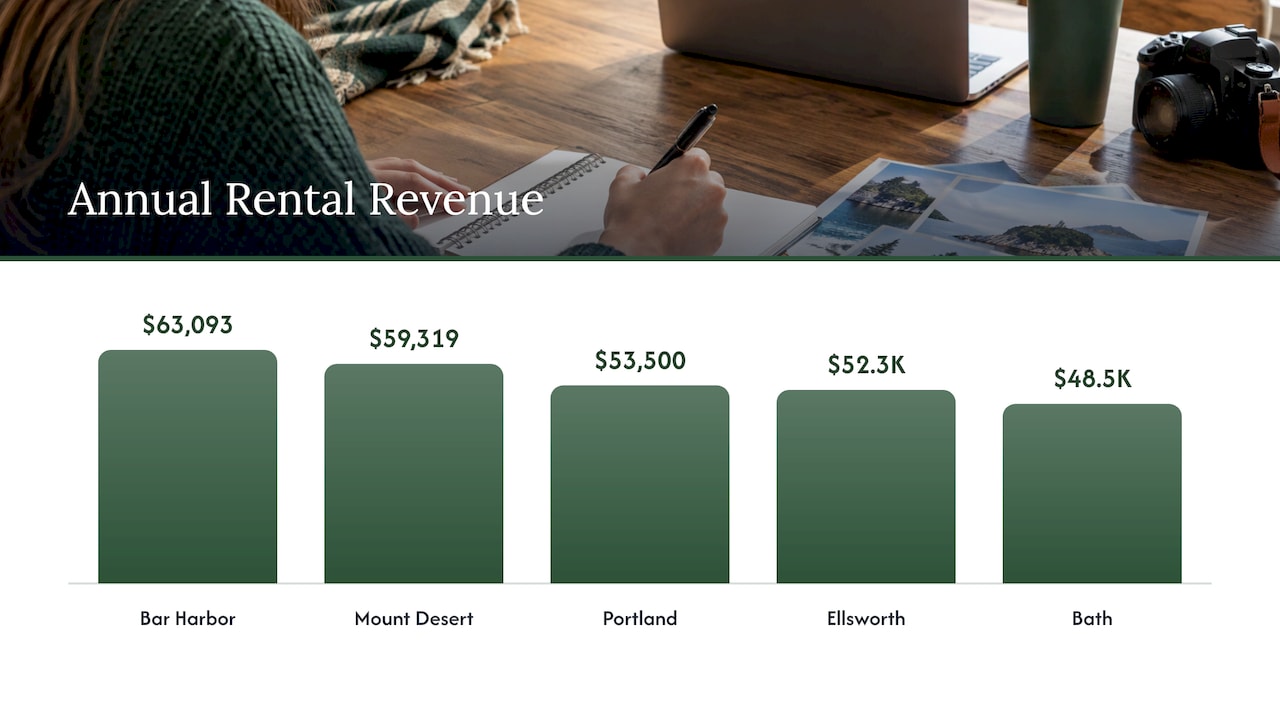
The coast works differently. Instead of a 12-month lease, you earn nightly rates in a short season. A state-level housing study notes that Maine attracts retirees and second-home buyers, and that 76% of vacant housing in 2022 was seasonal, recreational or occasional use.
| Market | Average annual revenue | Occupancy | Source |
|---|---|---|---|
| Bar Harbor | $63,093 | 58.2% | AirROI, 12 months to Oct 2026 |
| Mount Desert | $59,319 | n/a | AirROI |
| Portland | $53,500 | 50% | AirROI |
| Ellsworth | $52.3K | 66% | AirDNA, Oct 2026 |
| Bath | $48.5K | 64% | AirDNA, Sept 2026 |
Two details matter. Bar Harbor’s July revenue is about 7.8 times February’s, so your cash flow arrives in a few months and you need reserves for the rest. And Ellsworth is Maine’s largest short-term market with 898 active listings, which means more competition for guests. Bath’s revenue is up 93% year over year with 164 active listings, a smaller and faster-moving market.
If you are comparing income strategies beyond Maine, this overview of passive real estate income options helps frame where short-term rentals fit. For the Maine-specific tradeoffs, read our short-term vs long-term rental stress test.
Local rules can change the math
Bar Harbor’s housing analysis says rising short-term rentals have tightened the housing market for year-round residents and workers, which is why towns respond with rules. In Maine’s unorganized territories, the Land Use Planning Commission’s short-term rental rules took effect January 12, 2026, requiring a no-fee notice from operators. Its chairman said many towns are enacting their own regulations and signaled that the commission may consider more later.
Before you buy, confirm the town’s current ordinance. In Portland, our rundown of the city’s Airbnb rules and due diligence covers the permit and tax side.
What eats the yield: costs and risks
Gross yield is where the analysis starts. Here is what pulls it down.
Financing. One 2026 market analysis notes that with 30-year rates around 7.3% in early October 2026, every Maine loan runs negative leverage unless you underwrite a value-add plan that raises rent and value. It estimates that in Portland, rent after expenses covers about half of a 75% loan’s payment, and nearly two-thirds in Bangor. That does not mean Maine rentals cannot work. It means the plan has to be more than “collect rent.” Track where Maine mortgage rates stand before you set a budget.
Property taxes. Maine’s effective property tax rate fell from about 1.6% in 2019 to about 1.3% in 2024, but rentals do not qualify for the $25,000 homestead exemption that owner-occupants get. Our Maine property tax guide explains how the exemption works.
Insurance and operating costs. The same policy analysis reports that approved homeowners insurance rates are up about 32% since 2021, and rents are up 28%. Build real numbers into your pro forma. Turnover is a recurring line too: between tenants you will budget for cleaning, paint and systems service, and a lease turnover vent cleaning checklist shows one item property managers schedule.
Rent rules. Portland limits most units to one increase every 12 months, using the city’s yearly percentage, which was 2.2% for 2026, plus banked increases. Check any city’s rules before you underwrite rent growth.
Vacancy and supply. Maine’s rental vacancy rate was 4.4% in Q3 2026, below the 7.6% national rate, a good sign for landlords. But MaineHousing expects employment growth to stay flat, and 1,209 affordable rental units were under construction entering 2026, so stress-test both demand and new supply.
Tenant-occupied purchases. If you buy a building with tenants in place, deposits and leases transfer with it. Read how to avoid deposit liability at closing first.
The market timing picture
Prices have run well ahead of incomes. MaineHousing reports that from 2021 through 2025, the median home price rose 36.9% against 19.2% nationally. The relief for buyers is inventory: the state economist reports that it was about 20% higher in August 2026 than a year earlier, though still below pre-pandemic levels. More choice generally means more room to negotiate.
Which market fits which buyer
- First-time investor, modest budget: Bangor, Lewiston-Auburn or Waterville. Lower entry prices and the strongest yield screens.
- Commuter-belt buyer who wants Portland demand: Westbrook or South Portland. Closer to the job market, more expensive than Bangor.
- Appreciation-focused investor with larger capital: Portland, Saco or Biddeford. Lower yields, deeper long-term demand.
- Vacation property seeker: Bar Harbor, Mount Desert, Ellsworth or Bath. Higher revenue per unit, seasonal cash flow, and the most local rule risk.
- Family relocating or senior downsizing: look at the same towns as a home first and a rental second. A property you would live in is easier to hold through slow months. Our cost of living guide for Maine shows what regional budgets buy.
Our perspective
We look at a rental market the way a buyer will live with it: one street, one house, one rent comp at a time. City rankings narrow the search, but they do not tell you whether a particular duplex in Lewiston has a roof that will need replacing, or whether a Bar Harbor cottage is allowed to host guests.
That is where local knowledge and a transparent process matter. We use data to price and negotiate, we are available beyond standard hours when an offer has a deadline, and we give unbiased advice about whether a property fits your goals, whether you are buying your first rental or a vacation home on the coast.
Start with the market, then get specific. Run the numbers on the actual property, with real taxes, insurance and financing, and decide from there.
David
Work with a Maine Realtor on your rental search
If you are ready to move from comparing cities to evaluating properties, we help buyers with home search, comparative market analyses, negotiation and guidance on FHA and conventional financing, plus document review for condos and townhouses. We also support investors and vacation or seasonal property buyers across central and southern Maine. See how we work with buyers and investors.

For more market notes and town guides, browse the Maine Real Estate Journal and our market notes.
FAQ
What is the best city in Maine to buy a rental property?
For gross yield, Bangor leads, at 6.7% in one 2026 analysis, followed by Lewiston. Portland has the strongest demand but a lower yield. The best city for you depends on your budget and how much management you want to do.
Is Portland, Maine a good place for rental investment?
Portland has the busiest rental market in the state, the highest rents, and steady employment-driven demand. Prices are high, so yields run around 5%, and the city’s rent-increase limits affect your rent growth. It suits investors prioritizing stability and appreciation over immediate cash flow.
Are short-term rentals profitable in Maine?
They can be, especially in Bar Harbor, Mount Desert and Ellsworth, where average annual revenue runs from about $52,000 to $63,000. Revenue is concentrated in summer, and towns are adding rules, so confirm local permission before buying.
Does gross yield tell me what I will earn?
No. It leaves out vacancy, taxes, insurance, maintenance and financing. Use it to shortlist markets, then calculate net operating income and cap rate for the specific property.
Sources
- ResiLine: Best Places to Buy Rental Property in Maine
- Maine Office of the State Economist: Demographic Trends
- Compounding Estates: Best Rental Property Markets in Maine
- RentMarker: Maine rental market data
- PERCH: Top Rental-Yield Metros in Maine
- CapRateCity: Maine rental property markets
- MaineHousing: Fair Market Rents
- HUD: Comprehensive Housing Market Analysis for Maine
- AirROI: Maine Airbnb markets
- AirROI: Bar Harbor Airbnb data
- AirDNA: Maine short-term rental data
- AirDNA: Bath short-term rental data
- Maine DACF: LUPC short-term rental rules
- Mainers First: The Landlord Next Door
- REI Prime: Maine Real Estate Market 2026
- MaineHousing: 2026 Housing Outlook Report
- Maine State Economist: Maine’s Economy Today
- RapidEye: Rental Vacancy Rate by State
- Passive Real Estate Income: 6 Ways to Earn It
- Lease Turnover Vent Cleaning: A Property Manager’s Guide